
Private Label Sunglasses Project Checklist: What Brands Should Confirm Before Starting
Planning a private label sunglasses project? This buyer-focused checklist explains what brands should confirm about product scope, branding, MOQ, sampling, packaging, quotation scope, and repeat-order references before moving forward.
Starting a private label sunglasses project involves more than choosing a product and adding a brand logo.
Before requesting a quotation or sample, brands should first define what is being branded, what is being customized, and what still needs to be confirmed with the supplier.
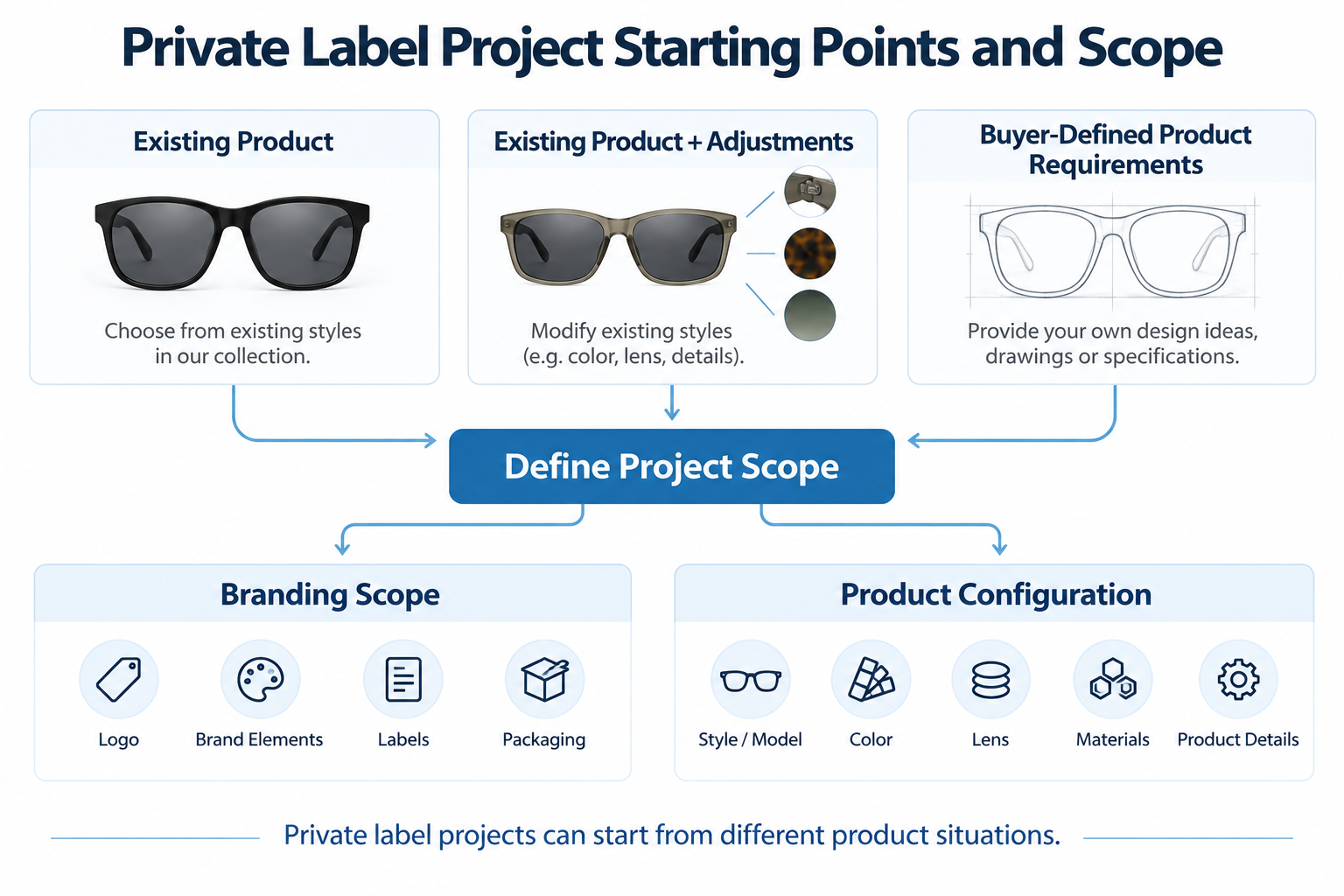
Private label projects can start from different product situations depending on the buyer's existing product base, customization needs, and project requirements.
For some projects, the buyer may select an existing product. In others, the selected product may still require further adjustments, or the buyer may already have their own product requirements.
The goal is to define the project scope clearly before moving into quotation, sampling, and production.
For brands preparing to launch a private label sunglasses project, understanding private label eyewear solutions can help clarify available manufacturing options before discussing product requirements and production plans.
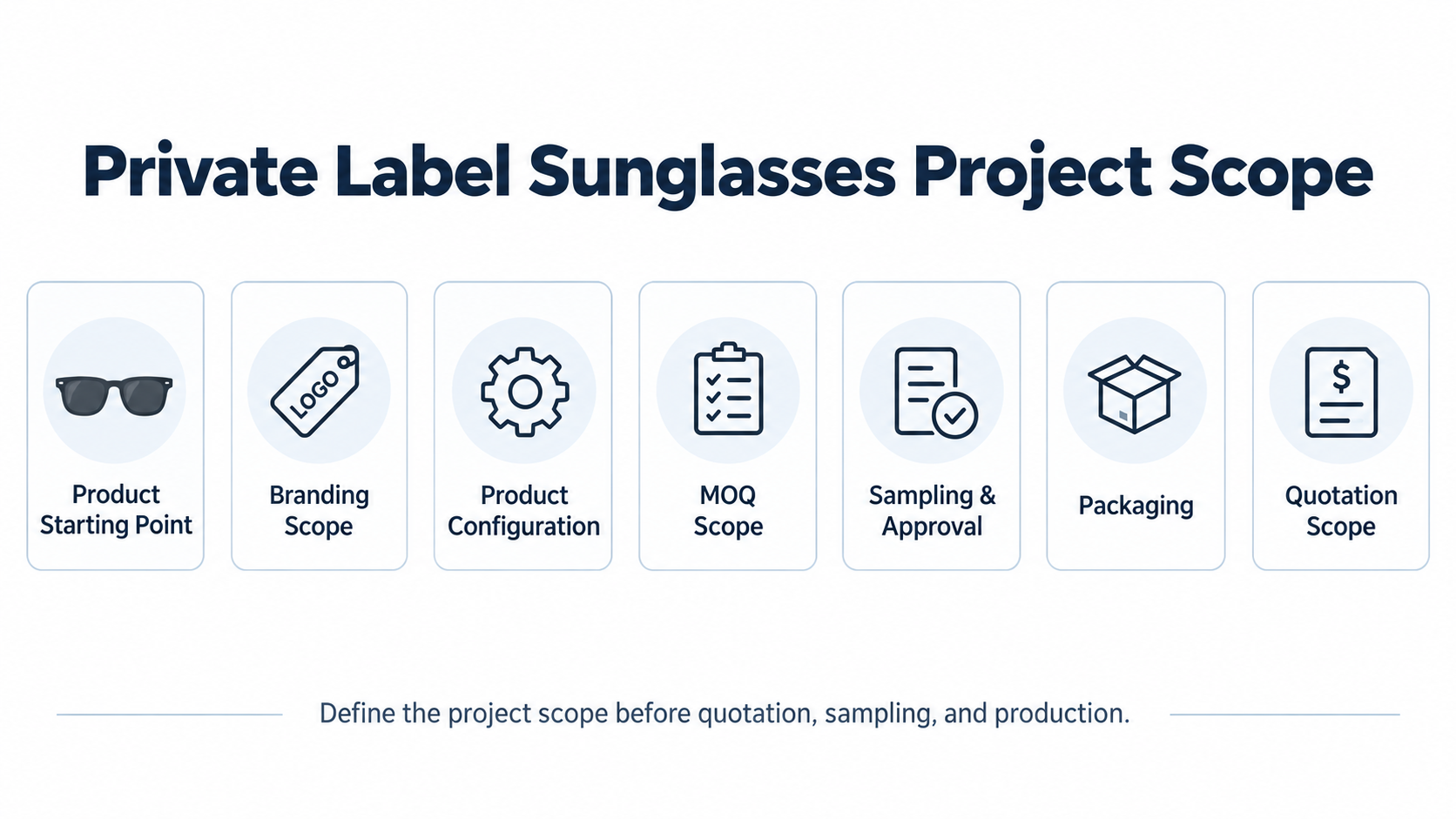
1. Define the Product Starting Point
The first step is to understand what the project is starting from.
A private label sunglasses project does not always begin in the same way.
Depending on the project, the buyer may:
- Select an existing product;
- Start from an existing product and request further adjustments;
- Bring an existing product or product requirements to the supplier;
- Discuss additional development based on the project needs.
This means private label should not automatically be understood as using an existing product without modification.
Before moving forward, brands should clarify:
- Has the product already been selected?
- Does the project start from an existing product?
- Does the product still require adjustment or development?
- Does the buyer already have its own product requirements?
A clear starting point helps the supplier understand what level of product work is required before branding and production.
2. Define the Branding Scope
The next step is to define where and how the brand should appear in the project.
Branding scope may include:
- Logo;
- Logo placement;
- Brand elements;
- Labels;
- Packaging;
- Other project-specific branding requirements.
The purpose is not to decide every branding technique at the beginning, but to make the expected brand presentation clear.
For example, brands should confirm whether the logo is required on the product itself, whether the packaging should carry the brand identity, and whether any labels or additional brand elements are part of the project.
For HECHANG private label projects, branding requirements are confirmed according to the specific customer and project.
3. Confirm the Product Configuration
A private label project also requires a clear understanding of the product configuration.
Brands should identify which product decisions are already fixed and which still need discussion with the supplier.
Depending on the project, this may include:
- Style or model;
- Color;
- Lens requirements;
- Material preferences;
- Other product details.
The goal is not to create a complete factory requirement list at this stage.
Instead, the brand should understand which parts of the product are already decided and which parts remain open for supplier discussion.
For brands with more detailed customization requirements, understanding custom eyewear manufacturing can help define product specifications and development expectations more clearly.
This helps create a clearer project scope before quotation and sampling.
4. Understand How MOQ Applies to the Project
MOQ (Minimum Order Quantity) is an important factor in private label sunglasses projects, but brands should first understand what the MOQ applies to.
The MOQ may relate to different parts of a project depending on the product requirements and supplier process.
Buyer Question
What does the MOQ apply to in this project?
For example, brands may need to confirm whether MOQ applies to:
- A specific product model;
- A specific color;
- A customized product requirement;
- Other project conditions.
Understanding the relationship between MOQ and project scope helps brands evaluate whether the manufacturing arrangement fits their current needs.
Brands should discuss MOQ requirements with suppliers based on the actual product and customization details.
5. Confirm Sampling Requirements
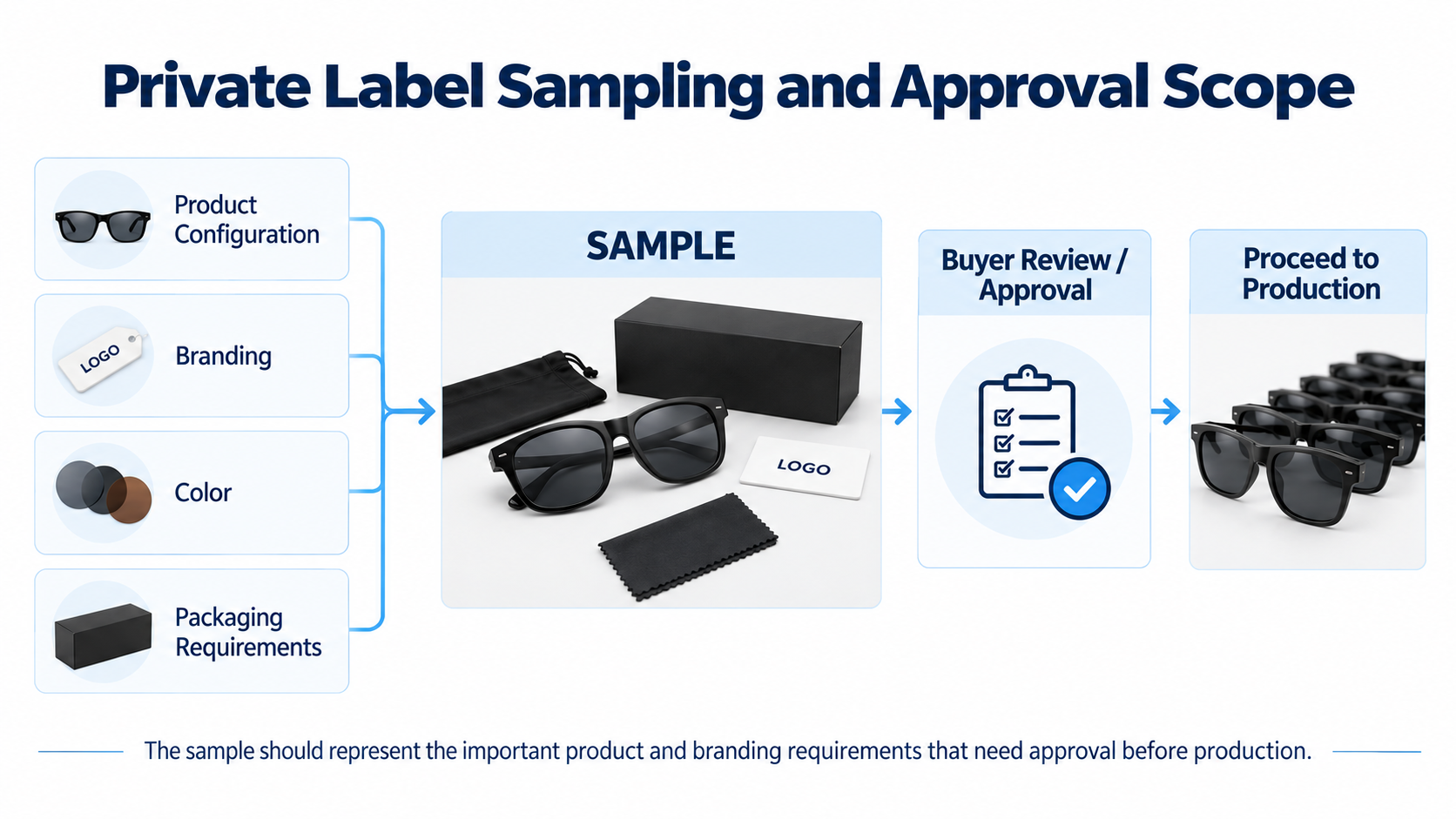
Sampling is an important stage in private label sunglasses projects because it allows brands to review product details before production.
Before starting sampling, brands should confirm what needs to be reviewed and what information should be provided.
Sampling discussions may include:
- Product details;
- Branding requirements;
- Materials and components;
- Other confirmed project requirements.
A clear sampling process helps both buyers and suppliers confirm the product direction before moving into mass production.
Key Point
Sampling should confirm whether the product meets the agreed project requirements before production.
6. Confirm Packaging and Additional Requirements
Private label projects often include packaging and additional requirements beyond the sunglasses themselves.
Brands should confirm which packaging elements and additional details are included in the project scope.
These may include:
- Packaging design;
- Labels;
- Accessories;
- Other project-related requirements.
Confirming these details early helps avoid misunderstandings during later stages of the project.
7. Compare the Project Scope Before Comparing the Price
When evaluating different private label sunglasses options, brands should compare the overall project scope instead of looking only at price.
Buyer Principle
Compare the project scope before comparing the price.
Different project requirements may involve different levels of product development, customization, packaging, and support.
A clear understanding of the project scope helps brands make more informed comparisons.
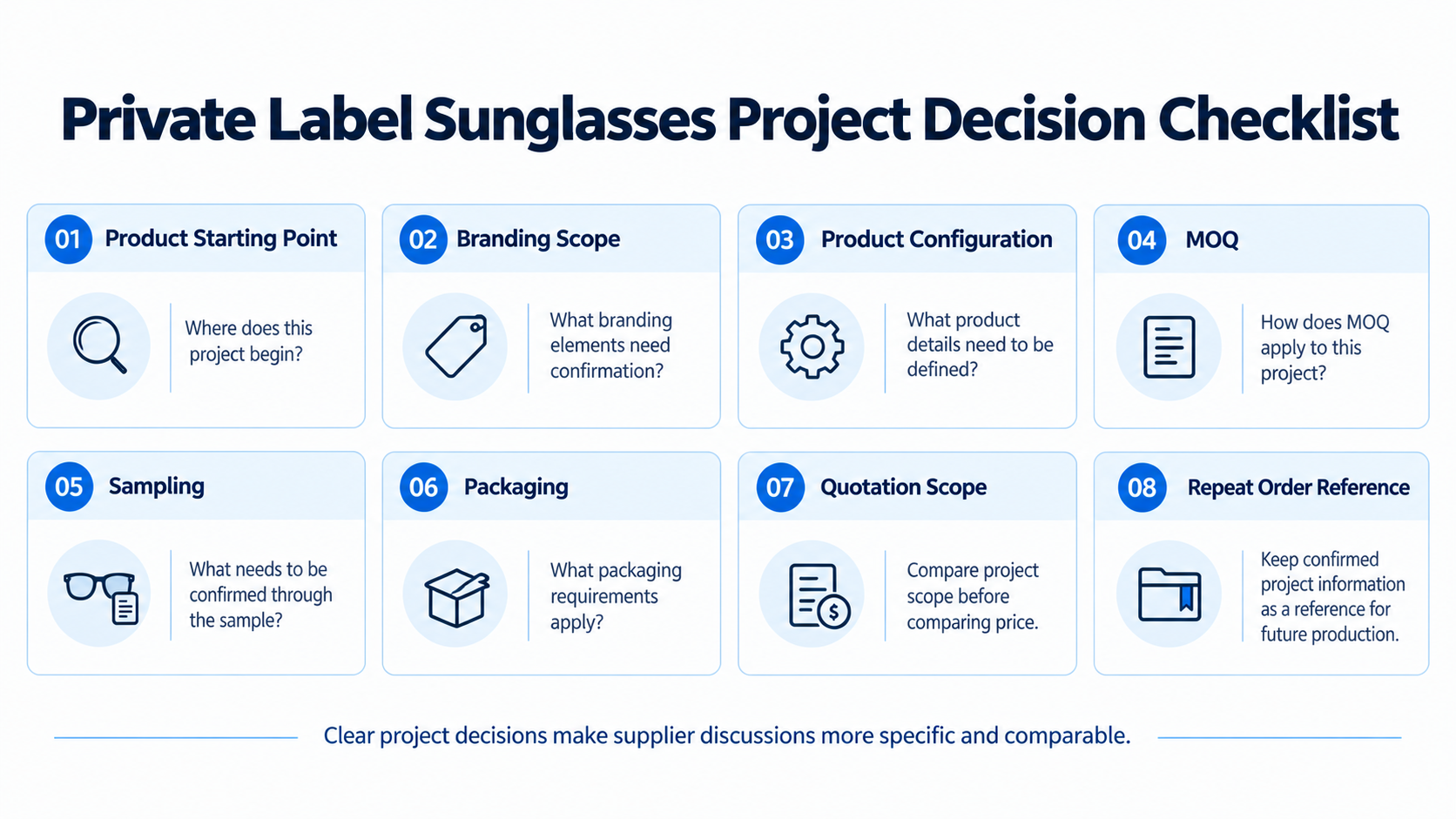
Private Label Sunglasses Project Decision Checklist
Before starting a private label sunglasses project, brands should confirm several key areas to create a clearer project scope.
| Decision Area | What the Brand Should Confirm |
|---|---|
| Product Starting Point | Whether the project starts from an existing product, product requirements, or further development needs. |
| Branding Scope | Logo, packaging, labels, and other brand presentation requirements. |
| Product Configuration | Product details, materials, colors, lenses, and other requirements. |
| MOQ Requirements | How MOQ applies to the specific project. |
| Sampling | What should be reviewed and confirmed before production. |
| Packaging and Additional Requirements | Packaging details and other project-related requirements. |
What Private Label Does Not Automatically Define
The term private label alone does not define the full project scope.
A private label project may involve different product starting points, customization requirements, and levels of supplier support depending on the specific project.
Important Considerations
- Product starting point
- Customization requirements
- Development support needs
- Project agreements
Brands should discuss these factors with suppliers based on their actual project requirements.
Start Your Private Label Sunglasses Project
Ready to Discuss Your Private Label Project?
You can learn more about HECHANG's private label eyewear manufacturing options.
If you are still evaluating product directions for your project, you can also explore HECHANG's sunglasses range.
If you are ready to discuss a private label sunglasses project, contact HECHANG Optical and share the product, branding, packaging, and other project requirements currently available.
Private Label Eyewear Manufacturing Options Sunglasses Range Contact HECHANG OpticalRelated Resources
Custom Eyewear Manufacturing Checklist: What Should Buyers Provide to the Factory?
Manufacturing preparation checklist for eyewear buyers.
Eyewear Sample Approval Checklist: What Buyers Should Confirm Before Mass Production
A guide for reviewing eyewear samples before production.
FAQ
What is a private label sunglasses project?
A private label sunglasses project allows brands to develop sunglasses products under their own brand identity based on their project requirements.
Can private label sunglasses projects include customization?
Customization depends on the specific project requirements, product conditions, and supplier capabilities.
What should brands prepare before contacting a supplier?
Brands should prepare available product information, branding requirements, project goals, and other details that can help suppliers understand the project scope.
FAQ
What should a brand confirm before starting a private label sunglasses project?
Brands should first confirm the product starting point, branding scope, product configuration, MOQ conditions, sampling requirements, packaging scope, and what is included in the quotation. These items help define the actual project scope before production begins.
Does private label sunglasses always mean choosing an existing product?
No. A private label sunglasses project may start from an existing product, an adjusted existing product, or the buyer's own product requirements. The actual starting point depends on the specific project.
What can affect the MOQ of a private label sunglasses project?
MOQ can be affected by the product, model, color, logo or branding requirements, packaging, and the overall project scope. Buyers should confirm how MOQ applies to their specific project rather than relying on one general quantity.
Is sample approval required before private label sunglasses production?
Yes. For HECHANG private label projects, sample approval is required before formal production. The sample should represent the important product, branding, and other agreed project requirements that need to be confirmed before production.
Are branding and packaging requirements the same for every private label project?
No. Branding and packaging requirements are confirmed according to the specific customer and project. The exact scope should be discussed before quotation, sampling, and production.
What should buyers compare when reviewing private label quotations?
Buyers should compare the project scope before comparing price. They should confirm whether each quotation covers the same product, branding, packaging, sampling, and other project-specific requirements.
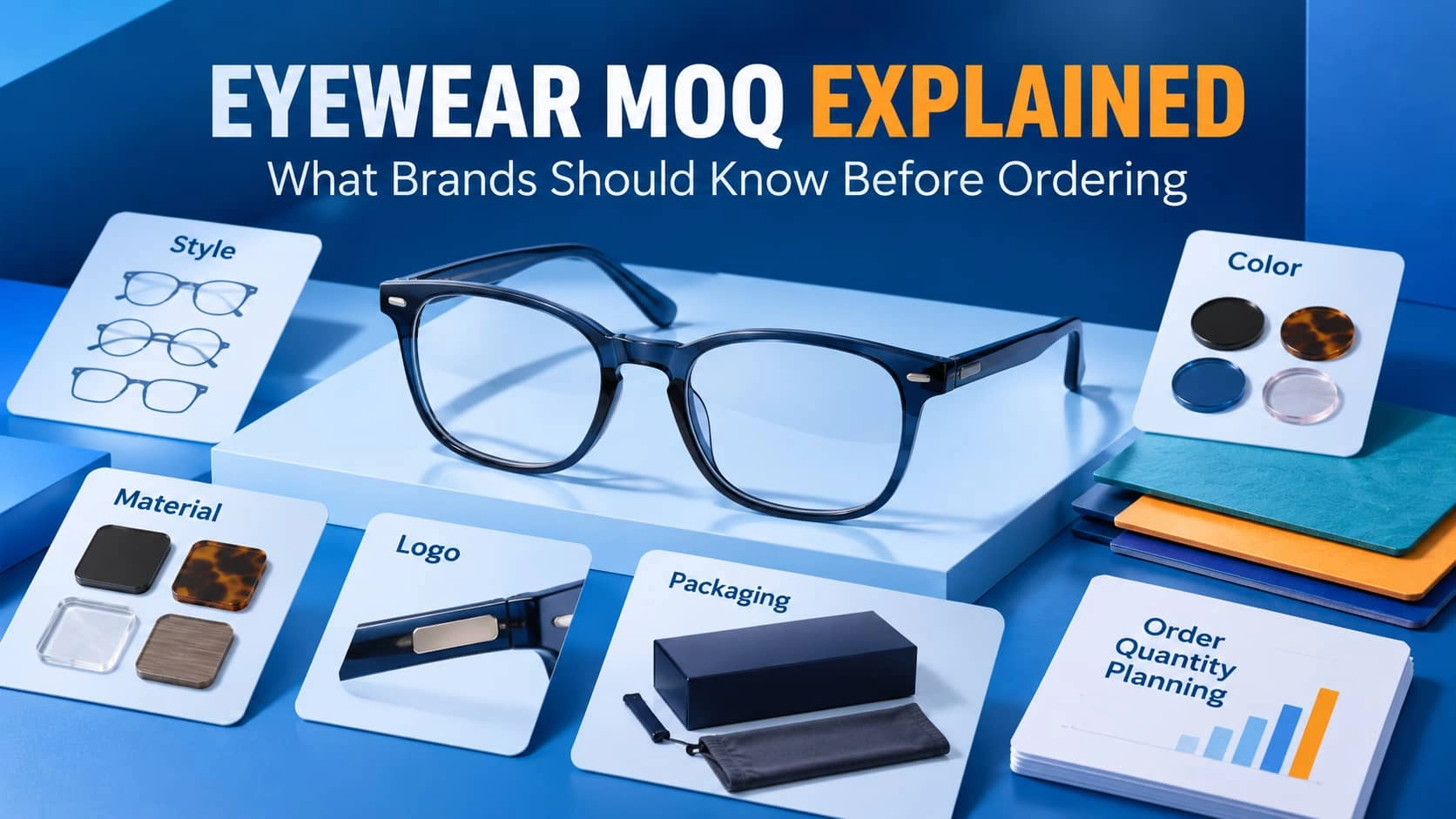
Eyewear MOQ Explained: What Brands Should Know Before Ordering
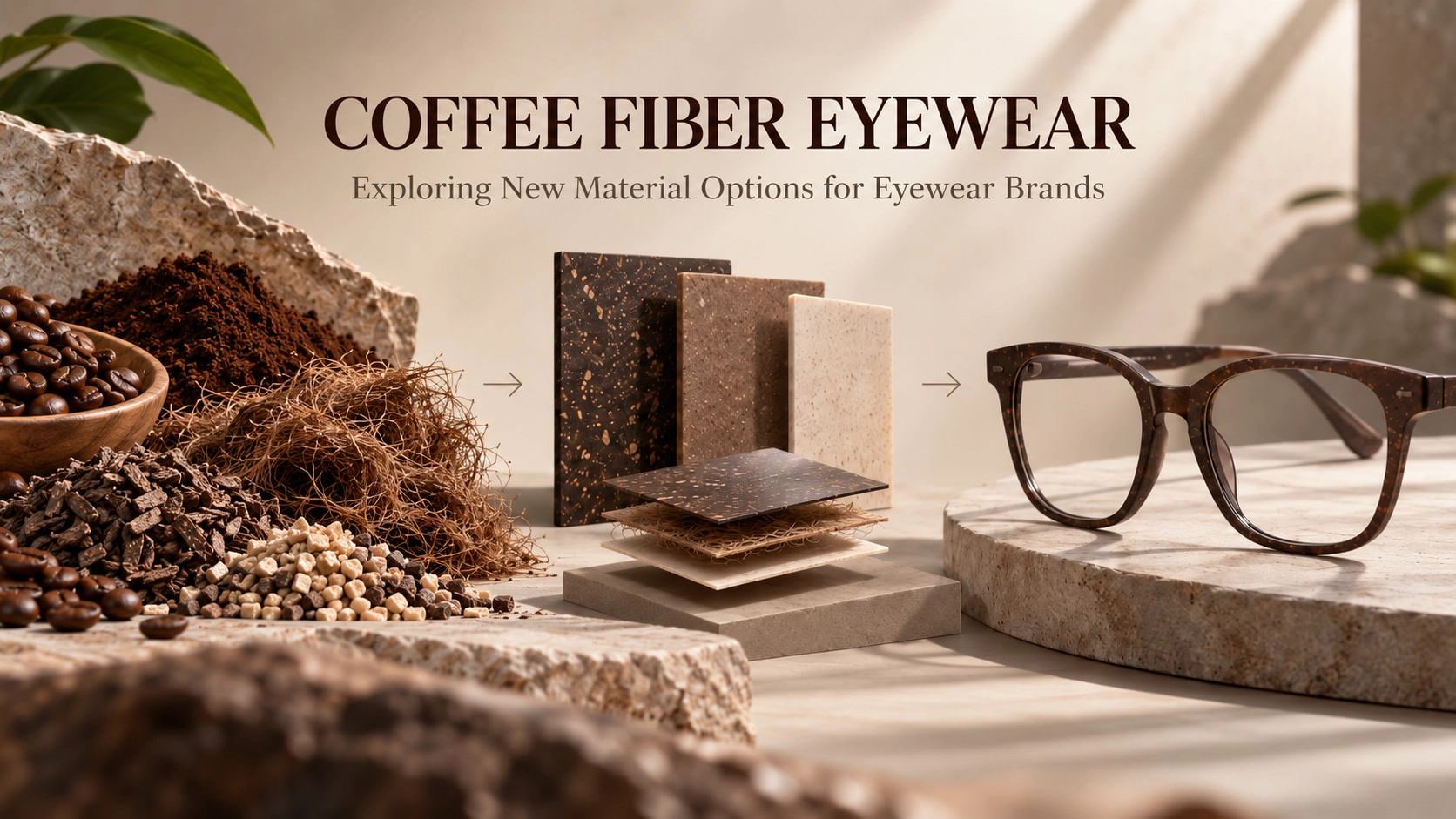
Coffee Fiber Eyewear: A Sustainable Material Solution for Eyewear Brands
Eyewear Manufacturing Process: A B2B Guide for Brands and Importers
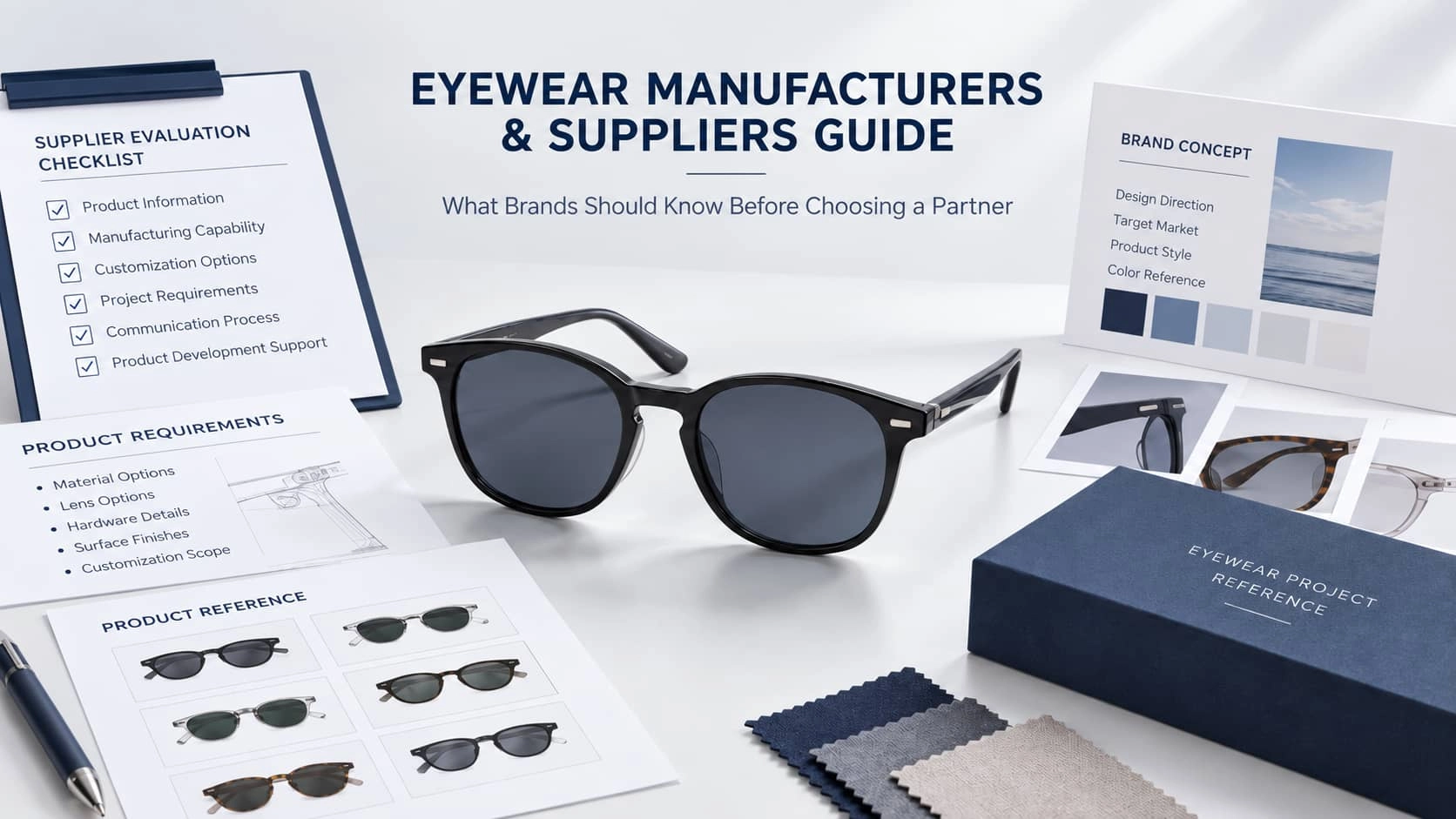
Eyewear Manufacturers and Suppliers Guide for Brands and Importers
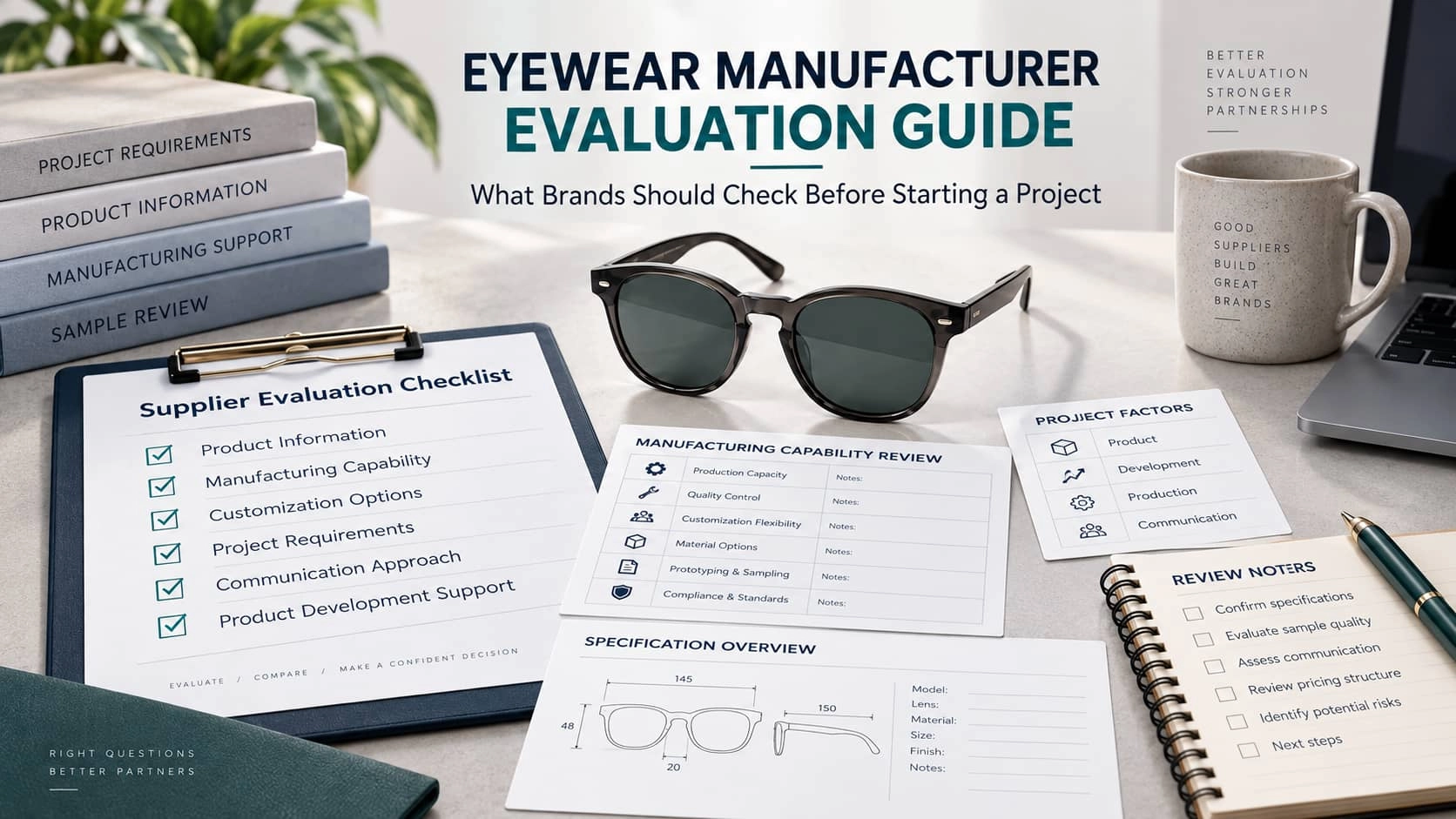
How to Evaluate an Eyewear Manufacturer Before Starting a Project
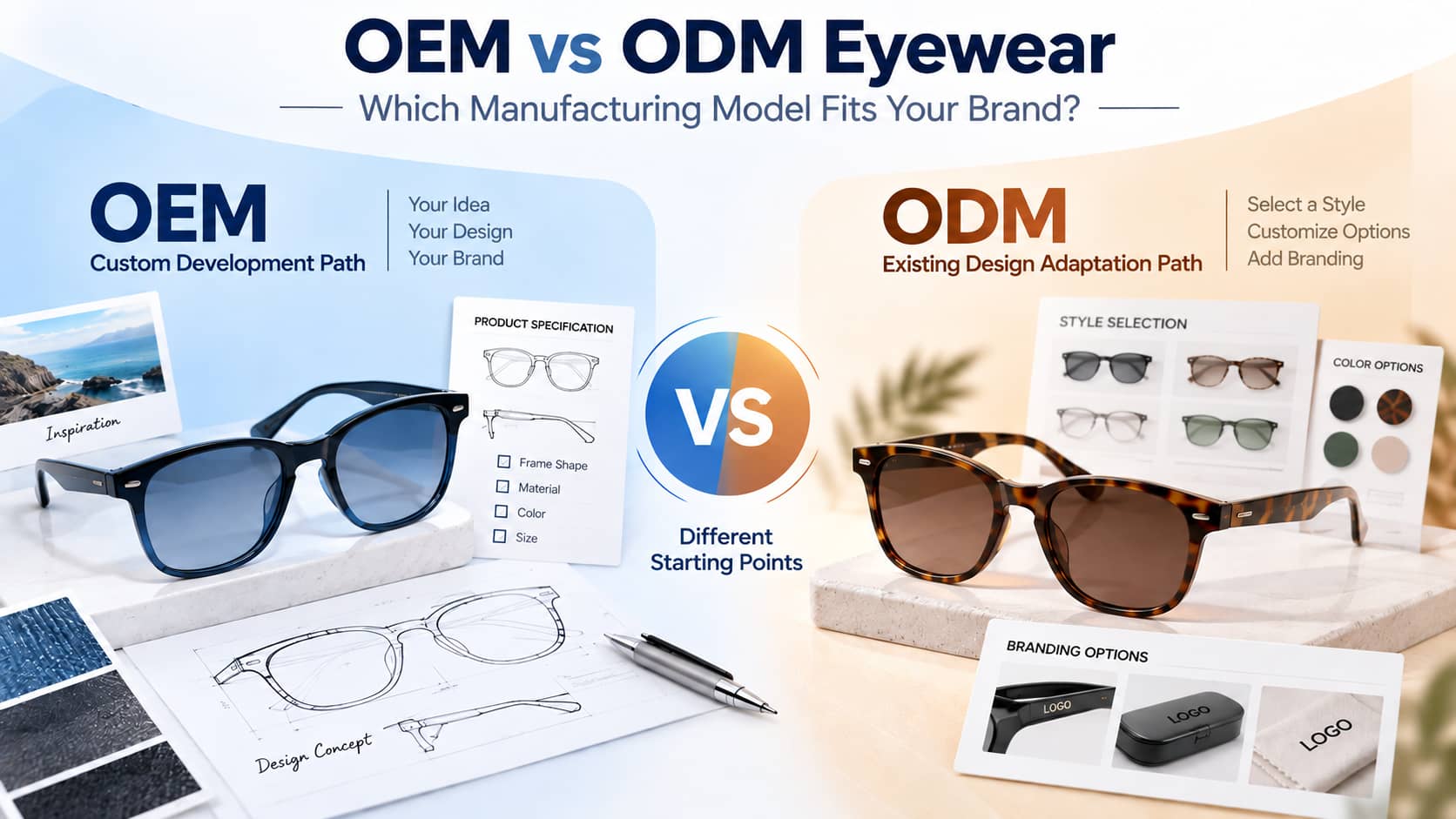
OEM vs ODM Eyewear: Which Manufacturing Model Fits Your Brand?
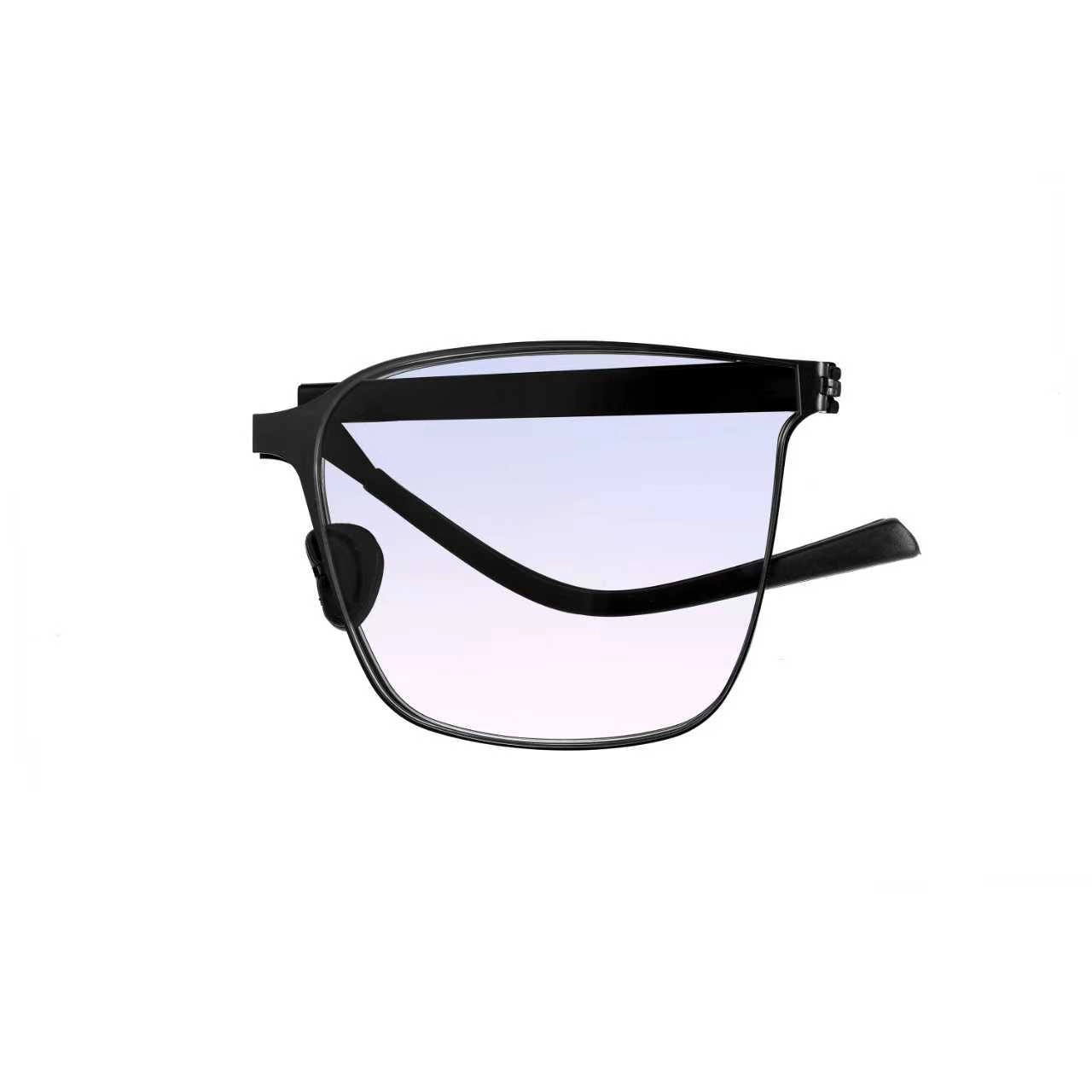
Lightweight Fashion Foldable Card Polarized Sunglasses
Foldable sunglasses----These 2025 foldable card polarized sunglasses combine cutting-edge design with practical functionality, tailored for modern consumers seeking style and portability. Featuring ultra-thin folding technology, weighing only 16 grams, and folding down to a slim 1.6 cm thickness, they easily fit into a pocket or small bag, making them ideal for daily commutes, travel, or outdoor activities. Equipped with high-quality polarized lenses, they offer superior UV protection and clear vision, ensuring comfort and style under the sun.

Fashionable large square frame jelly color sunglasses
Introducing HECHANG Optical's Cellulose Propionate Sunglasses, model 220104CA. Experience ultimate comfort and style with this UV-protective eyewear. Expertly crafted for optimal durability and eye protection, these sunglasses ensure you stay protected while looking chic. Elevate your eyewear game with our comfortable UV-protective sunglasses today.

Wholesale High-Quality Trendy Sunglasses with Interchangeable Temples HD001

Wholesale Sunglasses with Customizable Temple Patterns HD006
Submit Your Request Now!
Before diving into our services, please take a moment to fill out the corresponding form, detailing the type of eyewear you wish to import from China. Whether it's sunglasses, optical frames, reading glasses, or children’s glasses, we are committed to providing you with tailored solutions that meet your needs. Let us know your preferred materials, whether you require matching glasses case packaging, or any other specific requirements you may have.
Rest assured that your privacy is important to us, and all information provided will be handled with the utmost confidentiality.

MANUFACTURING ROOTS DATING BACK TO 1976.
Specializing in OEM and ODM eyewear manufacturing for international brands, HECHANG Optical serves customers across Europe, the United States, Japan, Australia, India, Russia, and other global markets. More about ↗
We’re here


 Scan QR Code