
How to Evaluate an Eyewear Manufacturer Before Starting a Project
Learn how brands and importers can evaluate an eyewear manufacturer by reviewing product experience, manufacturing capability, development support, communication, samples, and project fit before starting a new project.
How to Evaluate an Eyewear Manufacturer Before Starting a Project
Choosing the right eyewear manufacturer is an important decision for brands, importers, wholesalers, and private label buyers preparing a new project.
However, selecting a manufacturer is not only about finding a supplier that can produce eyewear products.
It is about finding a manufacturing partner whose experience, capabilities, communication approach, and project support match your specific requirements.
The right manufacturer depends on the project requirements, not simply the size or reputation of the supplier.
Before starting cooperation, buyers should evaluate whether a manufacturer has the suitable product experience, development support, production capability, and communication approach for their project.
What Does Eyewear Manufacturer Evaluation Mean?
Evaluating an eyewear manufacturer means assessing whether a supplier’s experience, manufacturing capabilities, development support, communication approach, and project conditions match the buyer’s requirements.
A suitable manufacturer is not necessarily the largest supplier or the one with the most general experience.
The key question is:
Can this manufacturer support my specific eyewear project requirements?
Different eyewear projects may require different types of support. For example, a sunglasses project, optical frame project, sports eyewear project, or private label project may have different product requirements and development considerations.
Understand Your Project Requirements Before Evaluating Manufacturers
Before evaluating potential manufacturers, buyers should first understand their own project requirements.
A clear understanding of the project helps brands identify which supplier capabilities are important and what type of support they need.
Define Your Product Category and Project Direction
The first step is identifying what type of eyewear product you are developing.
Important considerations may include:
- Product category;
- Target market;
- Customization requirements;
- Branding requirements;
- Expected development support.
For example, a brand developing sunglasses may look for different experience compared with a brand developing sports eyewear or optical glasses.
Understand Your Development Requirements
Different projects may require different levels of manufacturer involvement.
Before selecting a supplier, buyers should consider:
- Whether the product design is already available;
- Whether development support is required;
- Whether sample development will require discussion and adjustment;
- What information needs to be confirmed before production.
Understanding these requirements helps buyers evaluate whether a manufacturer’s capabilities match the project.
Evaluate Product Category Experience
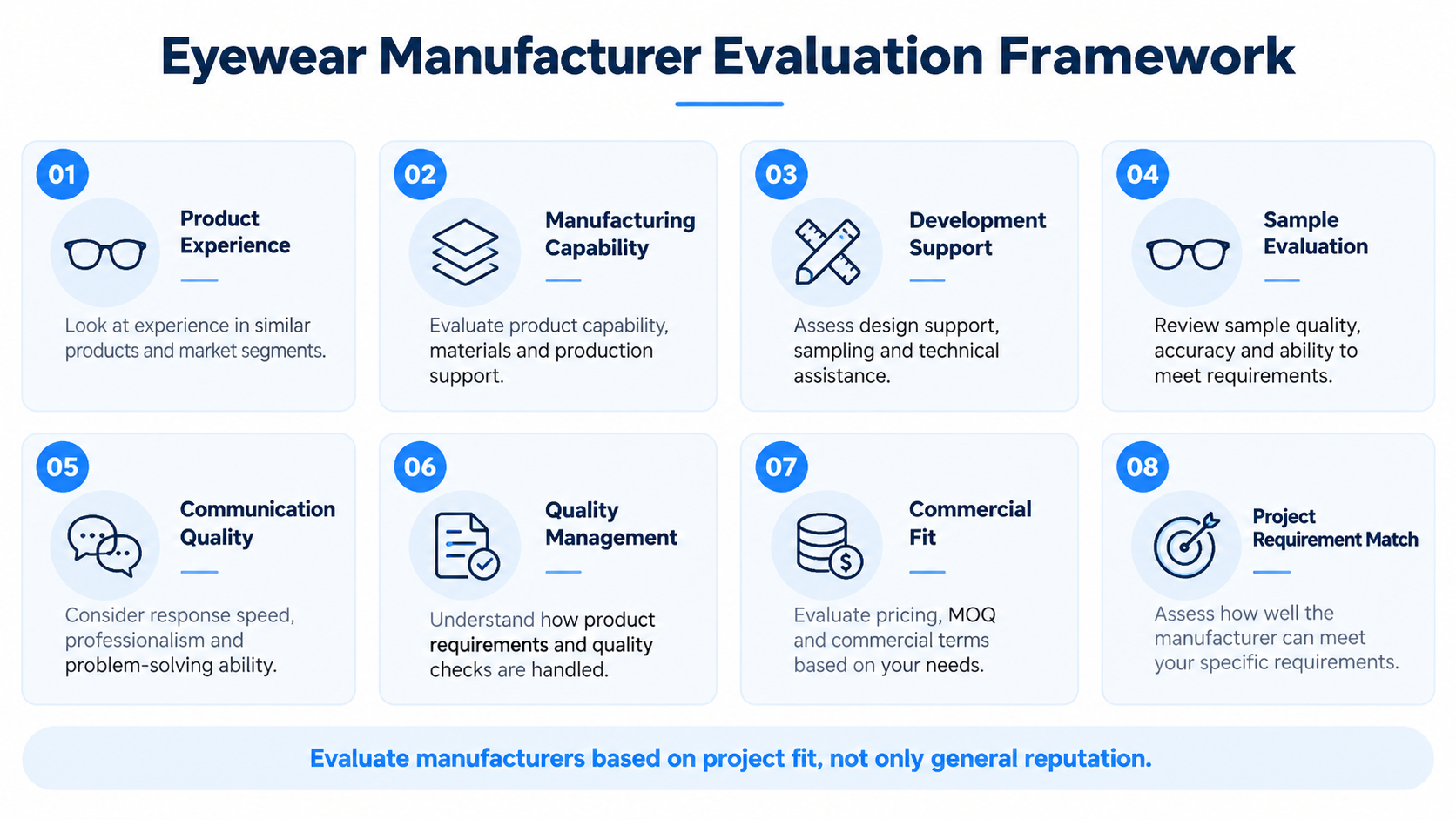
Product category experience is one of the important factors when evaluating an eyewear manufacturer.
A supplier may have eyewear production experience, but buyers should also consider whether that experience matches their specific product category.
Why Product Category Experience Matters
Different eyewear categories may involve different product requirements, design considerations, and development discussions.
Brands may consider whether a manufacturer has experience with products such as:
- Sunglasses;
- Optical glasses;
- Sports glasses;
- Ski goggles;
- Kids glasses.
Relevant product experience can help suppliers better understand project requirements and communicate more effectively during development.
Match Supplier Experience With Your Project Needs
When evaluating a manufacturer, buyers should focus on whether the supplier experience matches their own project requirements.
For example:
- A sports eyewear project may require experience with performance-related product requirements;
- A fashion eyewear project may focus more on design direction and product appearance;
- A private label project may require support for branding and product development needs.
The goal is not to find a manufacturer with every possible capability, but to find one that fits the specific project.
Evaluate Manufacturing Capability and Project Support
After understanding your project requirements, the next step is evaluating whether a manufacturer’s capabilities match your project needs.
Manufacturing capability is not only about whether a supplier can produce eyewear products. Buyers should also consider whether the manufacturer can support the specific requirements of the project.
Review Product Development and Production Support
Depending on the project requirements, eyewear manufacturers may provide different levels of support during product development and production.
Buyers can consider whether a manufacturer can support areas such as:
- Product development;
- Sample development;
- Production support;
- Requirement communication.
The exact support scope depends on the project type and cooperation requirements.
Consider Manufacturing Capability Based on Your Project
A suitable manufacturer should have capabilities that match the needs of your product.
For example, buyers may need to understand:
- Whether the supplier has experience with the required product category;
- Whether the supplier can support the expected customization level;
- Whether the supplier can communicate effectively during development;
- Whether the supplier can support the project requirements through production.
Manufacturing capability should always be considered together with project requirements rather than evaluated separately.
Review Development Support and Communication Quality
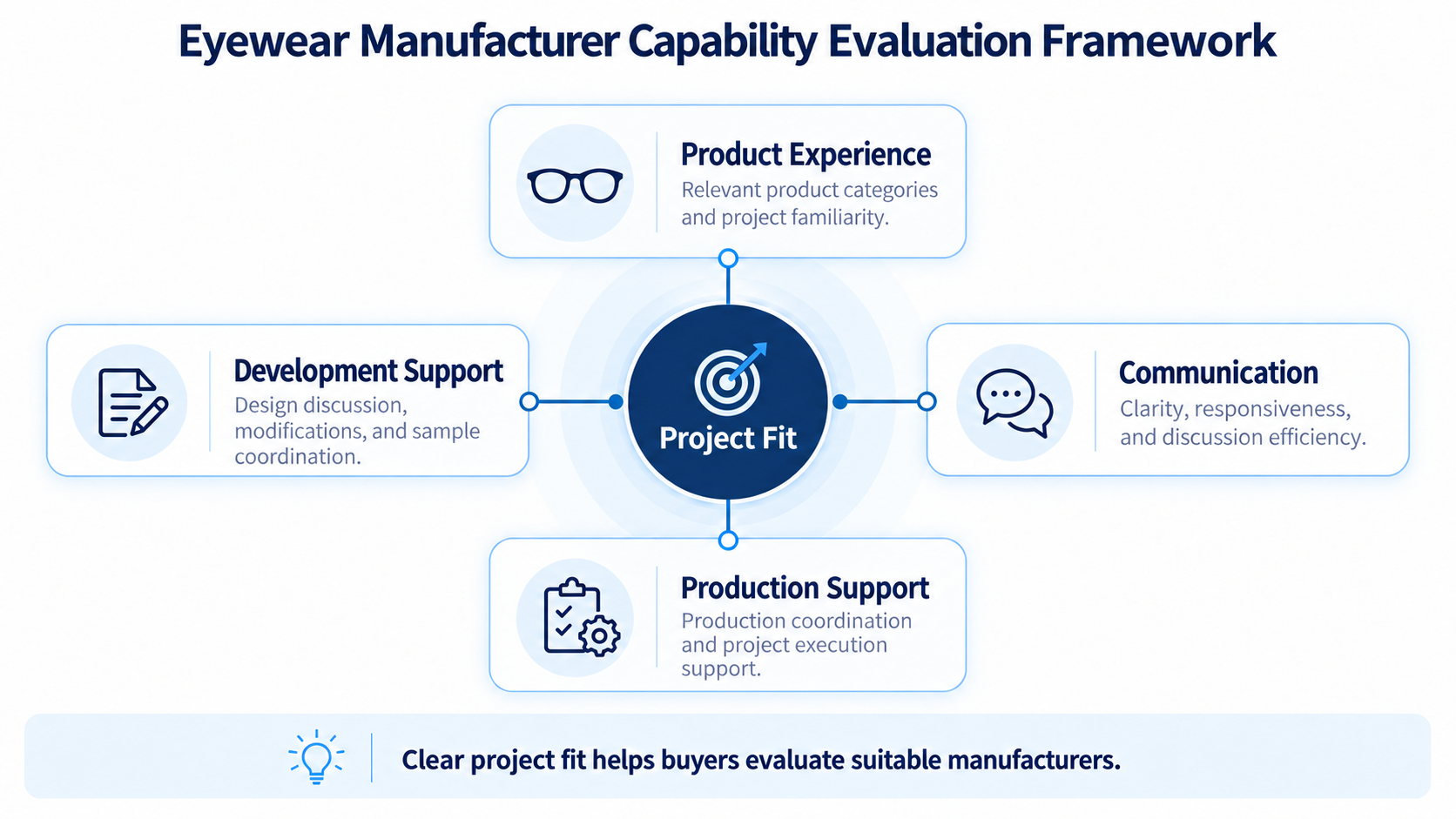
Product development often requires communication between buyers and manufacturers.
A supplier’s ability to understand requirements and discuss product details can directly affect the efficiency of the project.
Evaluate Requirement Understanding
Before starting cooperation, buyers should consider whether the manufacturer can understand:
- Product expectations;
- Design direction;
- Product requirements;
- Project priorities.
Clear communication helps both sides confirm important details and reduce misunderstandings during development.
Review Development Communication
During an eyewear project, communication may involve:
- Discussing product requirements;
- Reviewing design information;
- Confirming adjustments;
- Discussing sample feedback.
The communication approach may vary depending on the project and manufacturer. Buyers should confirm how project discussions will be handled before starting cooperation.
Evaluate Sample Development and Confirmation
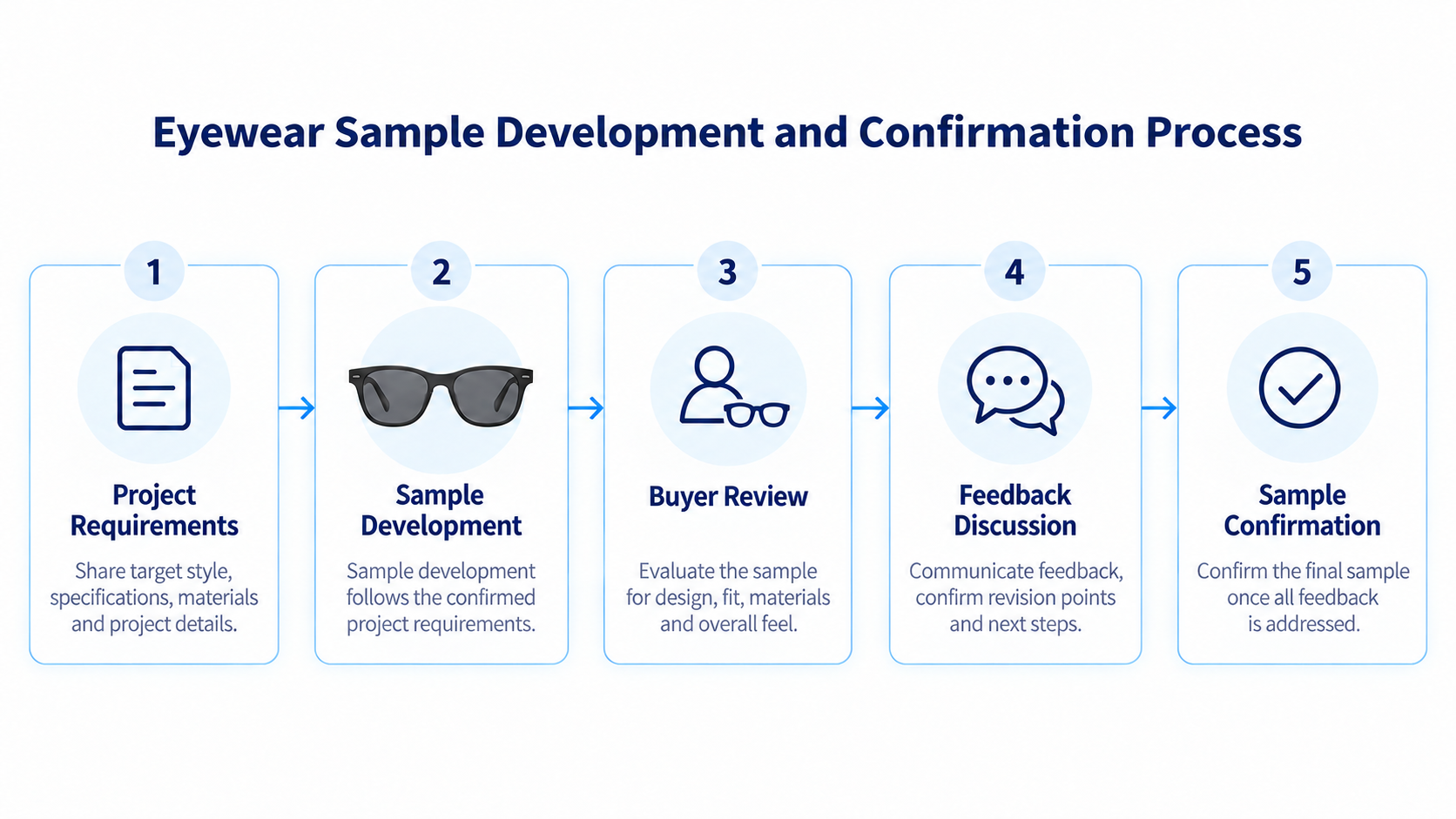
Sample development is an important stage for buyers to understand how a manufacturer handles product requirements.
A sample is not only used to check the product result. It also provides an opportunity to evaluate communication, understanding, and development coordination.
What Buyers Can Observe During Sample Development
During the sample stage, buyers may evaluate:
- Whether the manufacturer understands the product requirements;
- Whether feedback can be communicated effectively;
- Whether adjustments can be discussed according to project needs;
- Whether the sample reflects the confirmed requirements.
A smooth sample development process can help buyers better understand whether a manufacturer is suitable for long-term cooperation.
For more details about sample confirmation before production, buyers can also review:
Eyewear Sample Approval Checklist: What Buyers Should Confirm Before Mass Production
Understand Quality Management and Production Coordination
Quality management and production coordination are important parts of evaluating whether an eyewear manufacturer can support a project successfully.
Instead of only focusing on the final product result, buyers should also understand how a manufacturer manages quality control and production coordination during the project.
Review Quality Control Approach
Buyers can discuss how the manufacturer manages quality during production.
Important areas may include:
- Quality control during production;
- Inspection before shipment;
- Communication when product issues need to be discussed.
The specific quality management approach may vary depending on the supplier, product type, and project requirements.
Understand Production Coordination
A suitable manufacturer should be able to coordinate different project requirements during production.
Buyers may consider:
- How production details are confirmed;
- How project information is communicated;
- How changes or questions are handled during the process.
Good production coordination helps both buyers and manufacturers maintain clear expectations throughout the project.
Compare Commercial Fit Before Starting Cooperation
Besides product and manufacturing capabilities, buyers should also consider whether the commercial conditions match their project requirements.
Commercial fit does not simply mean finding the lowest price.
It means understanding whether the supplier’s project conditions, quotation scope, and cooperation approach match the buyer’s needs.
Consider Project-Specific Commercial Factors
Depending on the project, buyers may need to discuss:
- MOQ requirements;
- Quotation scope;
- Customization requirements;
- Project-specific conditions.
MOQ, quotation scope, production arrangements, and other commercial details should be confirmed according to the specific project rather than assumed based on general supplier categories.
For example, OEM and ODM labels alone do not automatically determine:
- MOQ;
- Development time;
- Cost;
- Ownership arrangements.
These factors should be discussed and confirmed according to the project requirements and agreement between the buyer and manufacturer.
Final Eyewear Manufacturer Evaluation Checklist
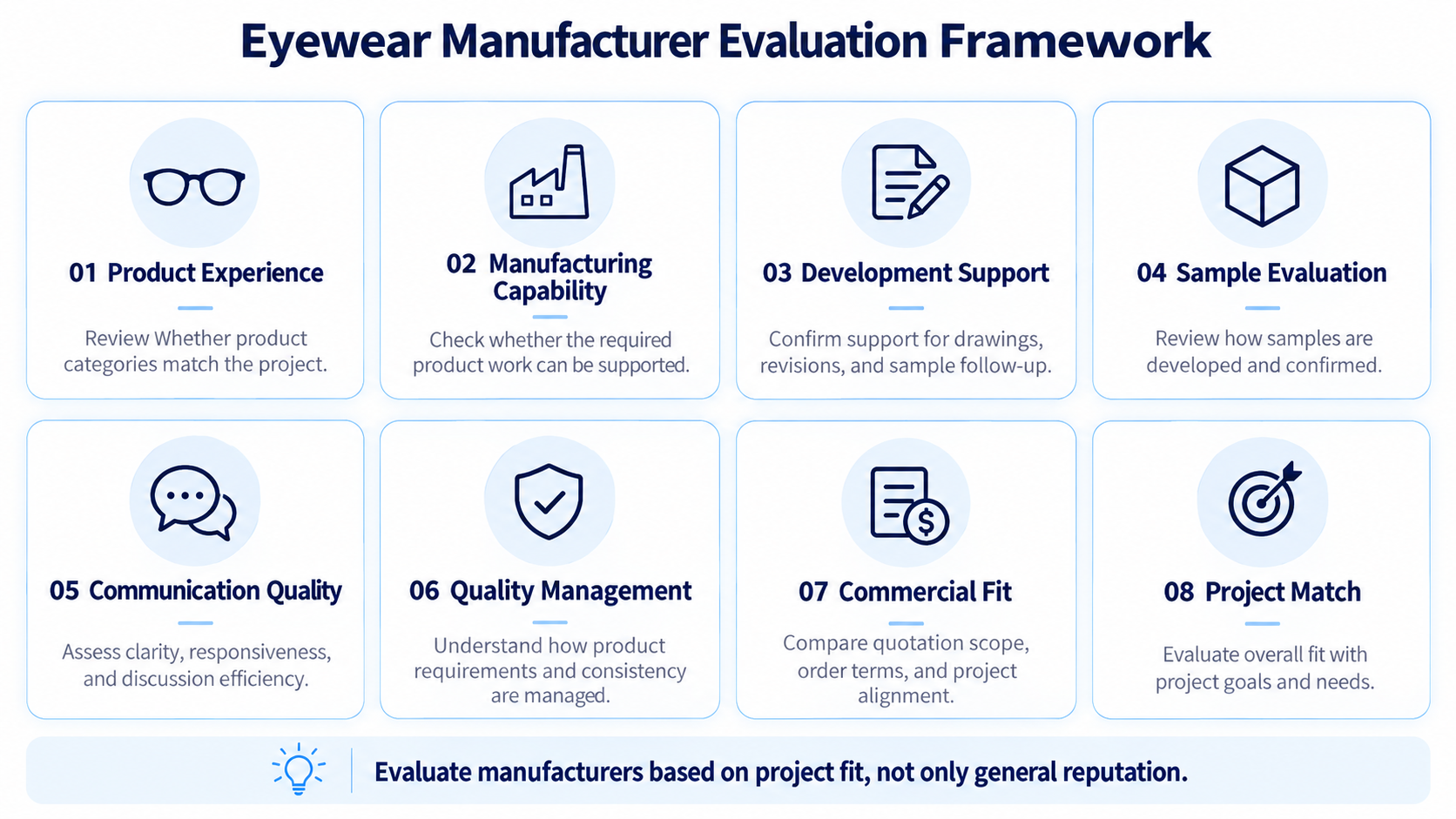
Before starting cooperation, buyers can use the following framework to review whether a manufacturer matches their project requirements.
| Evaluation Area | What Buyers Should Check |
|---|---|
| Product Category Experience | Whether the manufacturer has experience related to the buyer’s product category. |
| Manufacturing Capability | Whether the supplier’s capabilities match the project requirements. |
| Development Support | Whether the manufacturer can provide the level of development support required. |
| Communication Quality | Whether the supplier can understand requirements and communicate effectively. |
| Sample Development | Whether sample communication and confirmation support the project goals. |
| Quality Management | How quality control and inspection are handled during the project. |
| Commercial Fit | Whether MOQ, quotation scope, and project conditions match the buyer’s requirements. |
This evaluation framework helps buyers focus on project fit instead of simply comparing suppliers by size or general reputation.
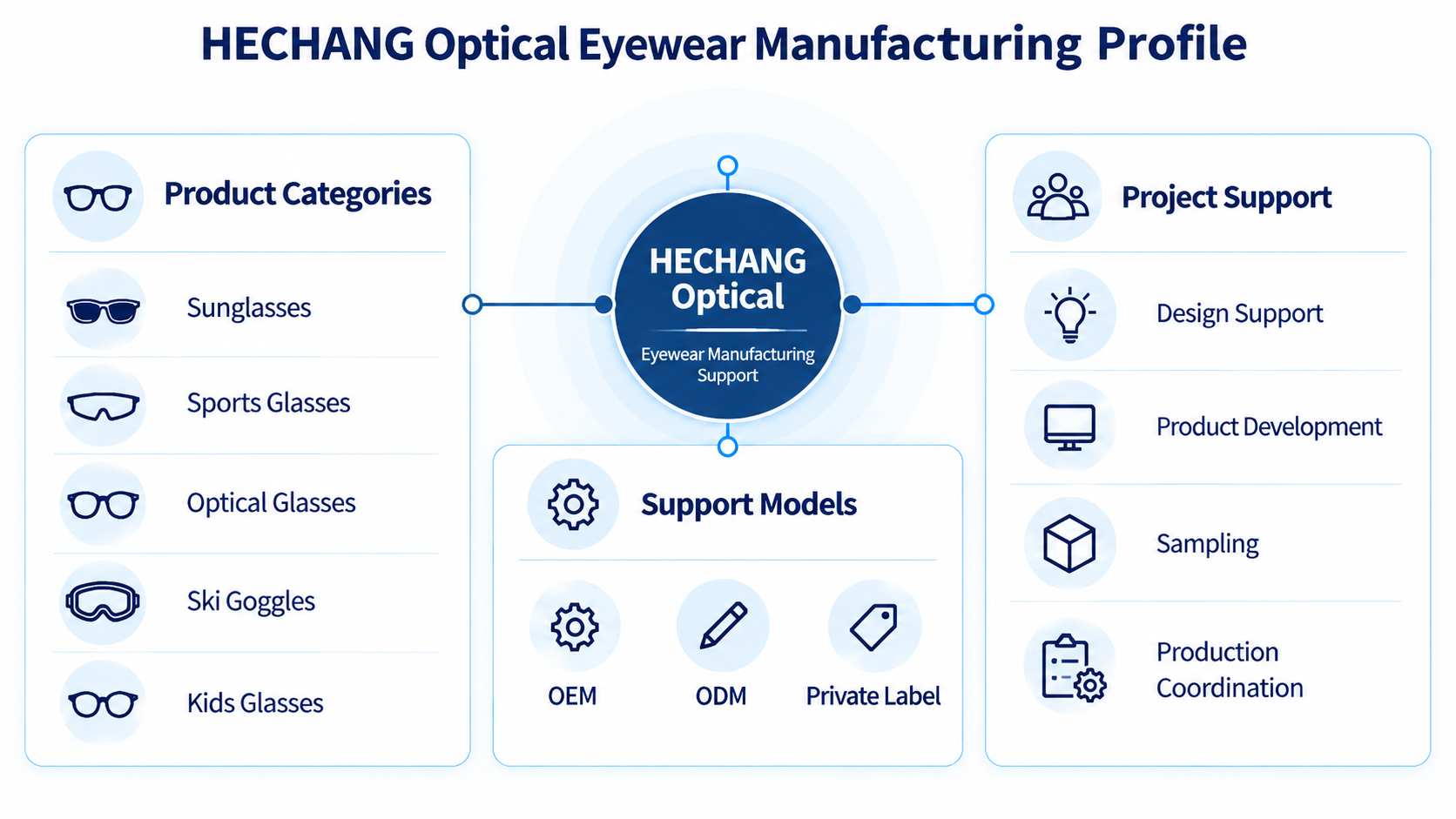
Example Manufacturer Profile: HECHANG Optical
After understanding how to evaluate an eyewear manufacturer, buyers can review whether a supplier’s product categories and support capabilities match their project requirements.
HECHANG Optical is an eyewear manufacturer based in China, supporting brands with different eyewear development and production projects.
Product Categories
HECHANG Optical supports multiple eyewear categories, including:
OEM, ODM, and Private Label Support
HECHANG supports OEM, ODM, and private label eyewear projects according to customer requirements.
Depending on the project scope, support may include:
- Product design;
- Product development;
- Sampling;
- Production.
For OEM projects, buyers may provide product designs, drawings, and product requirements. HECHANG supports development, sampling, and production based on confirmed project information.
For ODM projects, HECHANG participates in product design, development, and production according to customer requirements and project needs.
The specific cooperation scope may vary depending on customer requirements and project conditions.
The specific cooperation scope depends on each project and should be confirmed between the buyer and manufacturer.
Related Resources
You can also explore the following resources for different stages of eyewear project planning:
Discuss Your Eyewear Project With HECHANG Optical
Finding the right eyewear manufacturer starts with understanding your product requirements and identifying the type of support your project needs.
Whether you are developing sunglasses, optical glasses, sports glasses, ski goggles, or kids glasses, clear project communication helps both buyers and manufacturers understand the expected cooperation scope.
HECHANG Optical can discuss your eyewear project requirements, including product direction, development needs, and production requirements.
FAQ
What should brands check before choosing an eyewear manufacturer?
Before choosing an eyewear manufacturer, brands should consider whether the supplier’s experience, manufacturing capabilities, development support, communication approach, and project conditions match their requirements. Important areas may include product category experience, sample development, quality management, and commercial fit.
What makes an eyewear manufacturer suitable for a project?
A suitable eyewear manufacturer is one whose capabilities match the requirements of the project. The right choice depends on factors such as product category experience, required development support, communication quality, and project-specific conditions.
Should brands choose the biggest eyewear manufacturer?
Not necessarily. The suitable manufacturer depends on whether the supplier’s capabilities match the project requirements, including product type, development needs, and cooperation expectations.
What is the difference between finding an eyewear supplier and evaluating one?
Finding a supplier focuses on understanding available supplier types and identifying potential manufacturers. Evaluating a supplier focuses on deciding whether a specific manufacturer is suitable for a particular project.
How many factors should brands consider when evaluating an eyewear manufacturer?
There is no fixed number of factors that applies to every project. Brands should focus on the factors that are most relevant to their requirements, such as product experience, manufacturing capability, development support, sample communication, quality management, and commercial fit.
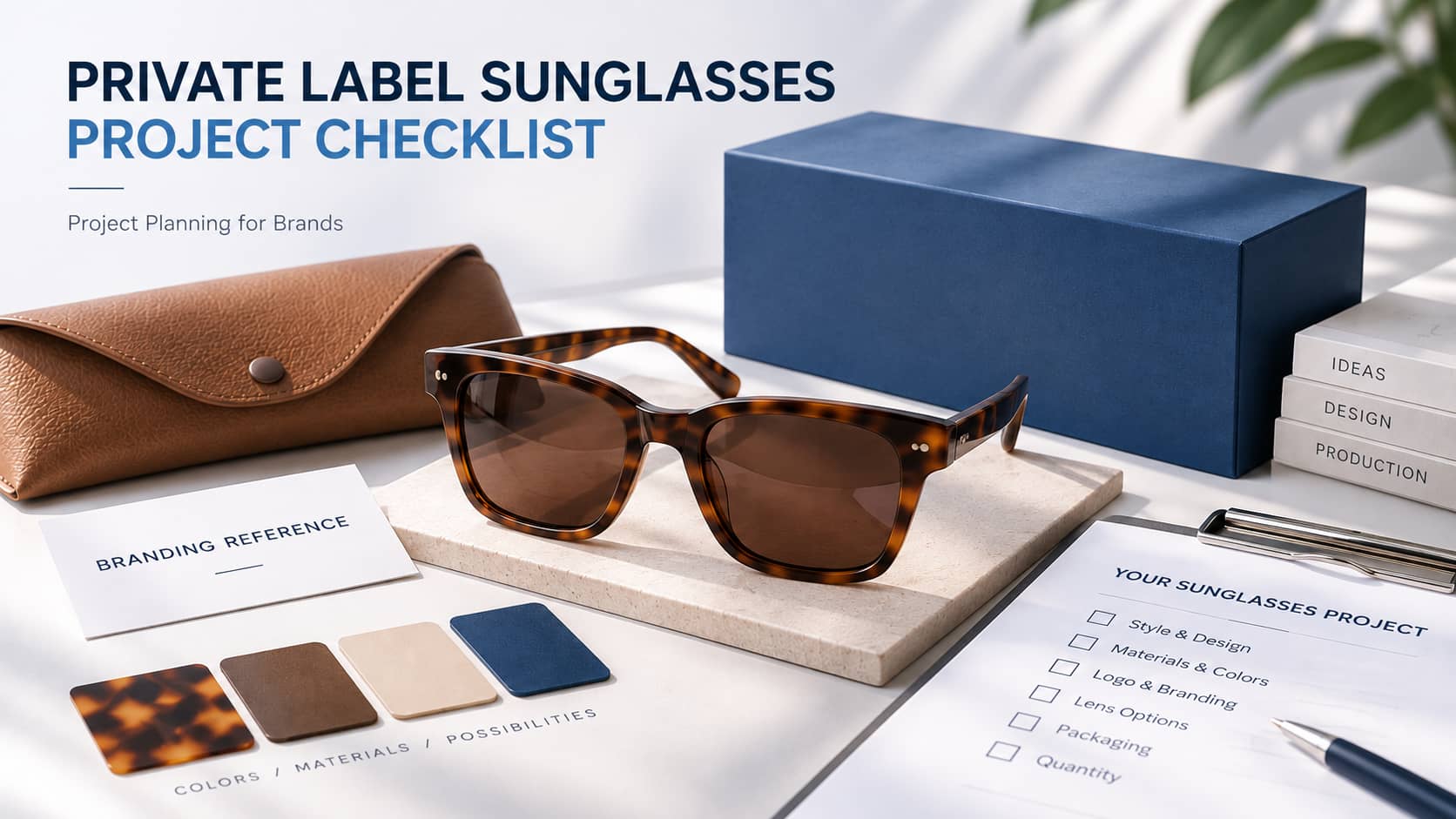
Private Label Sunglasses Project Checklist: What Brands Should Confirm Before Starting

Customizable Orange Sports Sunglasses S434

Wholesale Sleek Geometric Gradient Lens Sunglasses OLD7460

Wholesale Round Slim Metal Frame Fashion Sunglasses OLD7461

Wholesale Retro Round Gradient Lens Sunglasses OLD7459
Submit Your Request Now!
Before diving into our services, please take a moment to fill out the corresponding form, detailing the type of eyewear you wish to import from China. Whether it's sunglasses, optical frames, reading glasses, or children’s glasses, we are committed to providing you with tailored solutions that meet your needs. Let us know your preferred materials, whether you require matching glasses case packaging, or any other specific requirements you may have.
Rest assured that your privacy is important to us, and all information provided will be handled with the utmost confidentiality.

MANUFACTURING ROOTS DATING BACK TO 1976.
Specializing in OEM and ODM eyewear manufacturing for international brands, HECHANG Optical serves customers across Europe, the United States, Japan, Australia, India, Russia, and other global markets. More about ↗
We’re here


 Scan QR Code