
Eyewear Sample Development Process: What Brands Should Know Before Sample Approval
Understand how eyewear samples are developed from confirmed design requirements, including different sample types, RP prototypes, revisions, costs, and sample confirmation. Learn how HECHANG coordinates sampling and required tooling before mass production.
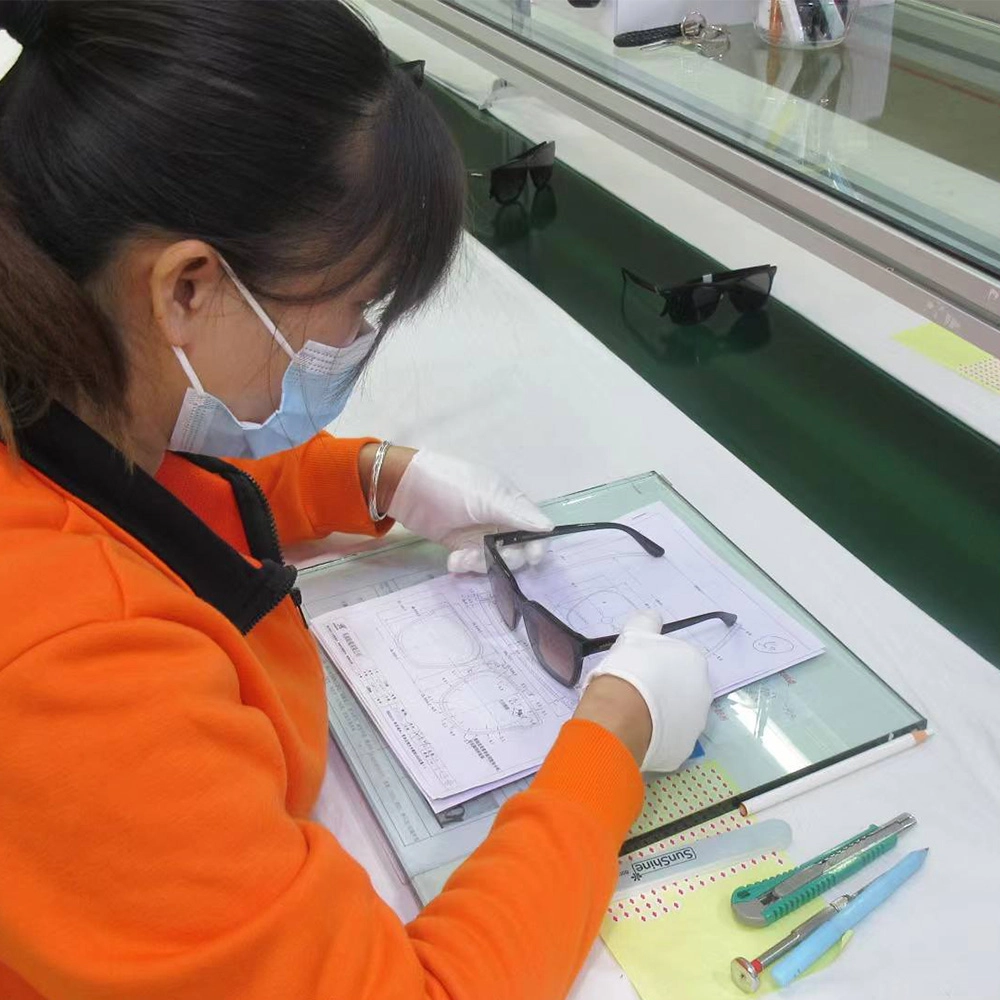
Eyewear sample development is the process of turning confirmed product requirements into physical development samples that can be reviewed, adjusted, and confirmed before the project moves toward tooling and mass production.
For HECHANG projects, sample development begins after the main product design and customization requirements have been defined clearly enough for development to proceed. Depending on the project, this may involve product design, dimensions, materials, colors, lenses, branding, components, packaging, and other relevant specifications.
Sample development is different from sample approval. Development focuses on how the sample is created and adjusted, while sample approval determines whether the resulting sample and project details are ready to move to the next stage.
What Is Eyewear Sample Development?
Eyewear sample development is the stage in which confirmed product requirements are translated into an actual sample for evaluation, adjustment, and confirmation.
The development scope depends on the specific eyewear project. A completely new product may involve a different level of development from a project based on an existing eyewear style.
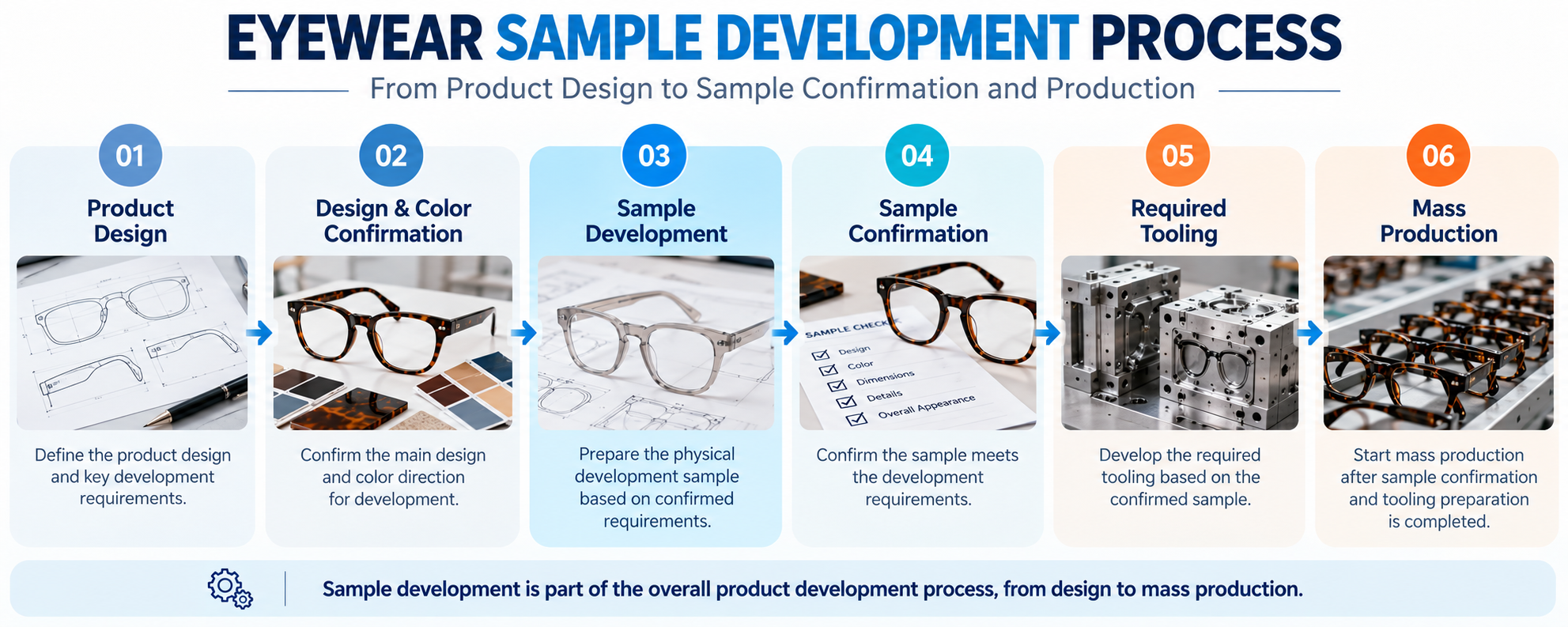
For HECHANG, the current confirmed development sequence is:
Sample development sits between the design-confirmation stage and the later sample-confirmation stage. It should therefore be treated as a development process rather than simply as a final inspection of a finished sample.
What Should Be Confirmed Before Sample Development Begins?
The information required before sampling depends on the project, but the product design and major customization requirements should be defined clearly enough for sample development to begin.
Depending on the project, buyers may need to clarify:
These items should not be treated as one fixed information sheet that applies identically to every project.
The Custom Eyewear Product Development Checklist provides a structured way to organize product requirements before the sampling stage begins.
What Types of Eyewear Samples May Be Used During Development?
HECHANG uses different types of samples or sample stages depending on the project.
These may include:
These sample types should not be treated as interchangeable or as a universal sequence that every eyewear manufacturer must follow.
Their use depends on the specific HECHANG project and development requirements.
For example, an RP Prototype may be used during product development, but it does not directly serve as the mass-production approval sample.
What Is an RP Prototype Used For?
For HECHANG projects, an RP Prototype may be used when the project requires an early physical reference for evaluating product design.
It can be used to review:
Whether an RP Prototype is required depends on the specific project. It is not a mandatory stage for every new eyewear development.
An RP Prototype also does not directly serve as the mass-production approval sample.
Its role is to support development evaluation when required, rather than to replace the later customer approval stage.
How Does the HECHANG Sample Development Process Work?
HECHANG’s current confirmed sample development flow is:
The process begins with the product design and the major design and color requirements being confirmed for development.
The project then moves into sample development, where the physical development sample is prepared according to the confirmed product requirements.
Development samples are generally prepared as closely as possible to the intended mass-production requirements.
This does not mean that every development sample is automatically identical to the final mass-produced product in every detail. The applicable development conditions depend on the specific project.
After the required sample has been developed, the project moves into sample confirmation. Required tooling is then handled according to the confirmed project before mass production.
Mass production should not proceed until the required sample and project details have been confirmed.
What Happens if the First Development Sample Needs Changes?
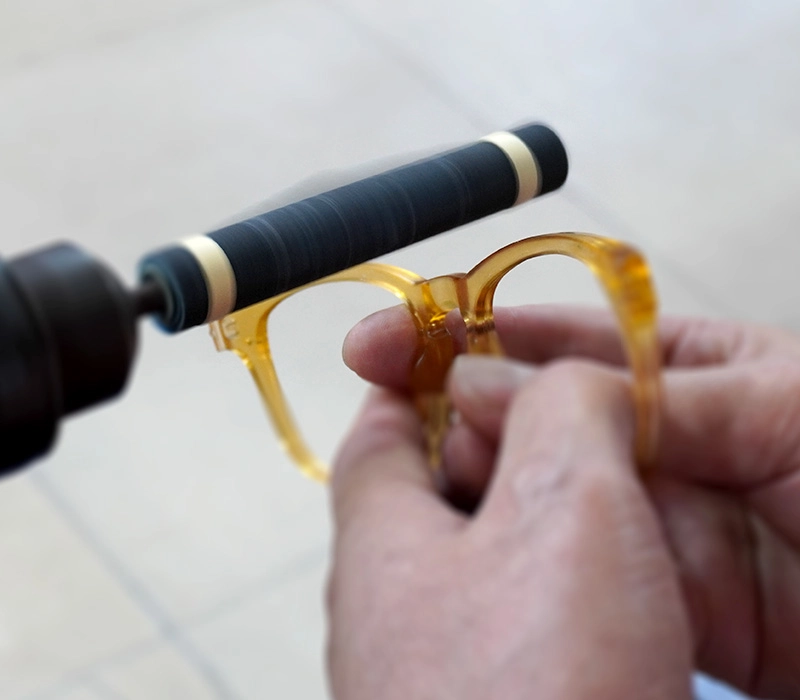
The first development sample may require changes before the project is ready for sample confirmation.
If the first development sample requires changes, the next step depends on the type and extent of the requested modification.
Depending on the actual project, the response may involve:
There is no single fixed revision process that applies to every sample change.
A modification should therefore not automatically be interpreted as requiring a complete new sample, and the appropriate development response should be determined according to the actual change.
How Are Sample Confirmation and Sample Approval Different From Sample Development?
Sample development and sample confirmation serve different functions within the project.
Sample Development
Sample development focuses on creating and adjusting the physical sample according to the confirmed product requirements.
Sample Confirmation / Approval
Sample confirmation or approval focuses on determining whether the sample and the relevant project details are ready to move to the next stage.
The customer-approved sample can also become an important reference for later production and quality control.
The sample approval process covers the product details buyers should confirm before approving the next production stage.
This means sample development answers how the sample is created and adjusted, while sample approval addresses whether the completed sample is acceptable for the project to proceed.
How Do Tooling Changes Affect Sample Development?
Tooling may become relevant as the sample development project progresses toward production.
If design changes are requested after tooling has been prepared, the existing tooling may need to be modified depending on the extent of the change.
A design change should not automatically be interpreted as requiring completely new tooling, and existing tooling should not be assumed to support unlimited modification.
The tooling response needs to be evaluated according to the actual design change.
Tooling cost, ownership, storage, and transfer conditions are separate project issues and are not part of the sample development decision itself.
How Are Sample Cost, Tooling Cost, Time, and Quantity Confirmed?
Sample development involves several commercial items that should be confirmed separately.
Sample Cost
Sample cost should be confirmed according to the specific development project.
Custom development samples are not free.
The sample fee should therefore be discussed according to the actual development requirements rather than assumed from other sample programs or existing-style projects.
Sample Fee and Tooling Fee
Sample development cost and tooling cost are separate project items and should be confirmed individually.
A sample fee should not automatically be assumed to include tooling, and a tooling fee should not automatically be assumed to include sample development.
Sample Development Time
Sample development time should be confirmed according to the specific project requirements.
HECHANG does not use one fixed publicly stated sample development lead time for every project.
Sample development time should also be treated separately from the production lead time for a confirmed mass-production order.
Sample development time is separate from the eyewear manufacturing lead time for a confirmed mass-production order.Sample Quantity
Sample quantity should be confirmed according to the specific project.
There is no single fixed sample quantity that applies to every development project.
How Does Sampling Work for Existing Eyewear Styles?
A project based on an existing eyewear style may have a different development scope from a completely new eyewear design.
Existing-style projects may involve customization such as:
Whether a new or revised sample is required depends on the customization scope of the specific project.
An existing style should not automatically be assumed to require no new sample, and a minor customization should not automatically be assumed to require a completely new sample.
Existing-style projects should also not be assumed to always be faster, cheaper, or free from tooling requirements unless those conditions have been confirmed for the individual project.
Is Sampling Different for OEM, ODM, and Private Label Projects?
HECHANG does not use three separate fixed sampling processes simply because a project is classified as OEM, ODM, or private label.
The sampling rules are based on the specific product development requirements rather than using separate fixed sampling processes for OEM, ODM, and private label projects.
The development scope may still differ from project to project because the actual product requirements, customization needs, and starting point can be different.
For example, a private label project based on an existing style may have a different development scope from a completely new eyewear design, but the sampling decision is still based on the project requirements rather than the cooperation label alone.
What Should Brands Confirm Before Approving an Eyewear Sample?
Before formal sample approval, the brand should confirm that the current development sample has reached the appropriate stage for evaluation and that the main project requirements have been sufficiently defined.
The detailed approval criteria depend on the actual product and project requirements and should not be replaced by the sample development process itself.
The Eyewear Sample Approval Checklist provides the next-stage framework for evaluating the sample before the project proceeds toward production.
Planning an Eyewear Sample Development Project With HECHANG Optical
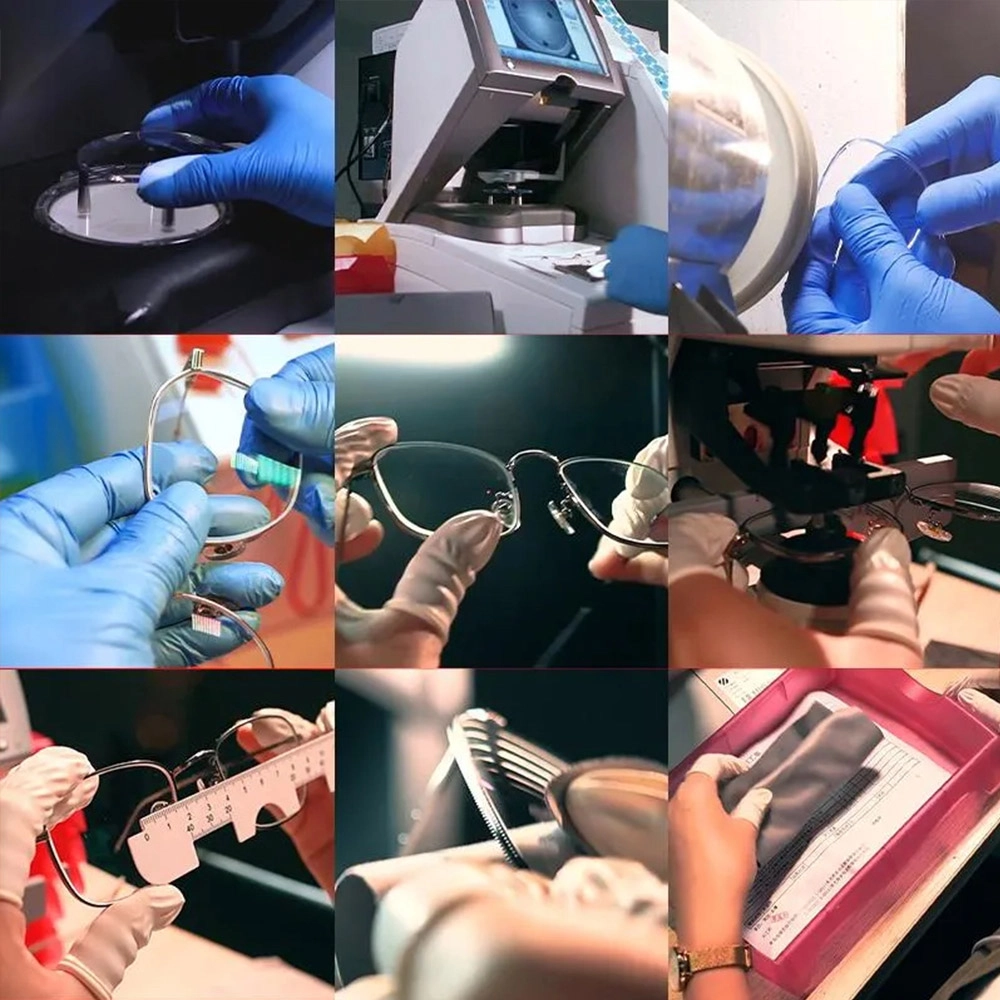
HECHANG supports product design, customization, prototyping, sampling, sample confirmation, and production coordination according to the specific project requirements.
Before sampling begins, the product design and major customization requirements should be defined clearly enough for development to proceed.
Depending on the project, HECHANG may use RP prototypes, development samples, customer approval samples, pre-production samples, or production samples at different stages.
RP prototypes are used according to project needs and do not directly serve as mass-production approval samples.
Development samples are generally prepared as closely as possible to the intended mass-production requirements, while any changes requested during development are handled according to the type and extent of the modification.
Sample cost, tooling cost, sample development time, and sample quantity are confirmed separately according to the specific project.
Brands with project-specific product development and sampling requirements can coordinate the development scope through HECHANG’s Custom / OEM & ODM Eyewear service.
Discuss Your Eyewear Sample Development Requirements
Share your product design, dimensions, materials, colors, lens requirements, branding, components, packaging, and other relevant development requirements with HECHANG Optical.
The sample type, development scope, sample cost, tooling requirements, development time, quantity, and confirmation process can then be coordinated according to the specific project.
Discuss Your Eyewear ProjectFAQ
What is eyewear sample development?
Eyewear sample development is the process of turning confirmed product requirements into physical samples for evaluation, adjustment, and confirmation before the project proceeds toward tooling and mass production. The development scope depends on the specific product and project requirements.
What is the sample development process at HECHANG Optical?
HECHANG’s confirmed development sequence is Product Design, Design and Color Confirmation, Sample Development, Sample Confirmation, Required Tooling, and Mass Production. Required tooling is handled according to the project, and mass production follows the required sample confirmation.
What information should buyers prepare before eyewear sampling?
Buyers should clarify the product design and major customization requirements before sampling begins. Depending on the project, these may include dimensions, materials, colors, lenses, branding, components, packaging, and other relevant product specifications.
What types of samples may be used during eyewear development?
Depending on the project, HECHANG may use an RP Prototype, Development Sample, Customer Approval Sample, Pre-production Sample, or Production Sample. These sample types are not interchangeable, and not every project necessarily requires every type.
What is an RP Prototype used for?
An RP Prototype may be used during early development to evaluate aspects such as appearance, shape, dimensions, structure, and design effect. Whether one is needed depends on the project. An RP Prototype does not directly serve as the mass-production approval sample.
What happens if the first eyewear development sample needs changes?
The next step depends on the type and extent of the requested changes. Depending on the project, the sample may be adjusted, a new sample may be prepared, or tooling-related adjustments may be considered where relevant. There is no single revision process that applies to every project.
What is the difference between sample development and sample approval?
Sample development focuses on creating and adjusting a physical sample according to the confirmed product requirements. Sample approval determines whether the sample and relevant project details are acceptable for the project to proceed to the next stage.
Are sample fees and tooling fees separate?
Sample development costs and tooling costs are separate project items and should be confirmed individually. A sample fee should not automatically be assumed to include tooling, and a tooling fee should not automatically be assumed to include sample development.
How long does eyewear sample development take?
Sample development time depends on the specific project requirements and should be confirmed with HECHANG for each project. There is no single fixed publicly stated sample development lead time for every project.
Is sampling different for existing eyewear styles?
The sampling requirements for an existing eyewear style depend on the customization scope. Changes to colors, branding, lenses, components, packaging, or other product details may affect whether a new or revised sample is required. An existing style should not automatically be assumed to need no sampling.
Visionworks Optical Frame Suppliers: What Public Import Records Reveal
Custom Metal Sunglasses Manufacturer: OEM Solutions for Eyewear Brands

America's Best Optical Frames: Manufacturers & Suppliers

Photochromic Sunglasses OEM: Lens and Frame Development for Brands
Fishing Sunglasses OEM: Lens and Frame Development for Brands
Cycling Sunglasses OEM: Product Design Considerations for Brands
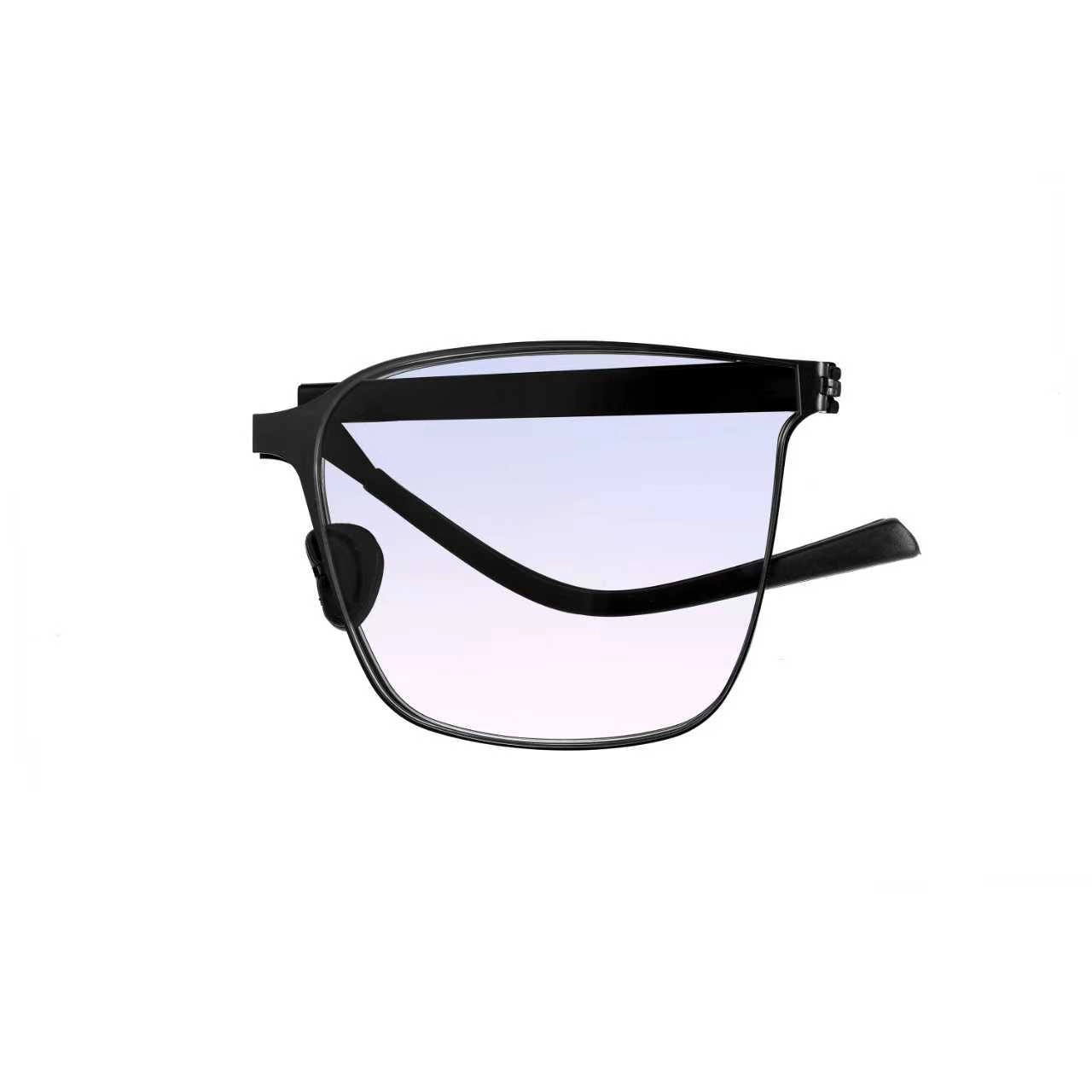
Lightweight Fashion Foldable Card Polarized Sunglasses
Foldable sunglasses----These 2025 foldable card polarized sunglasses combine cutting-edge design with practical functionality, tailored for modern consumers seeking style and portability. Featuring ultra-thin folding technology, weighing only 16 grams, and folding down to a slim 1.6 cm thickness, they easily fit into a pocket or small bag, making them ideal for daily commutes, travel, or outdoor activities. Equipped with high-quality polarized lenses, they offer superior UV protection and clear vision, ensuring comfort and style under the sun.
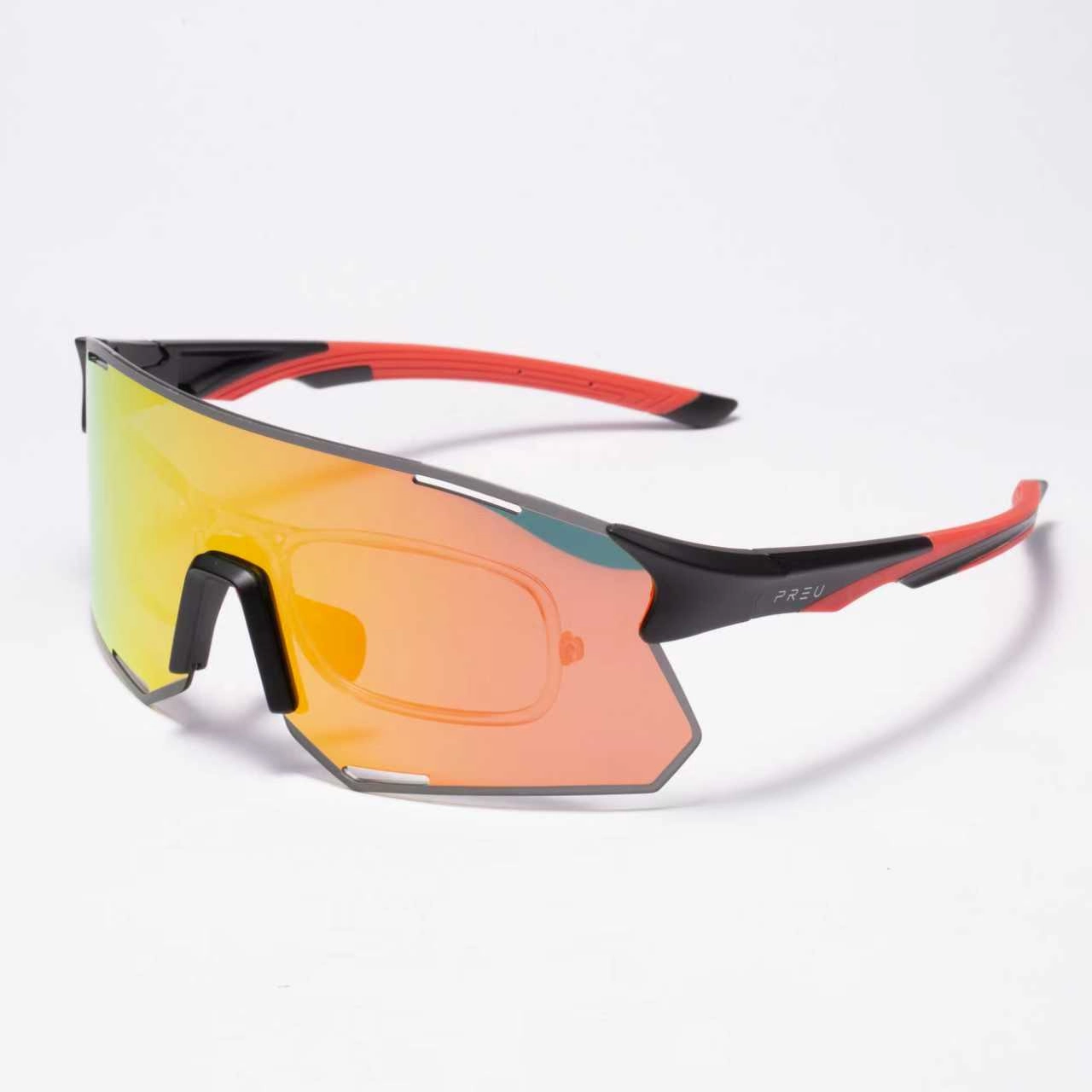
Wave VisionPro Dual-Layer Polarized Sports Sunglasses
The 2025 Hechang VisionPro Dual-Layer Polarized Sports Sunglasses are designed for active individuals who refuse to let vision challenges hold them back. Featuring an innovative dual-layer lens system, these sunglasses allow nearsighted users to seamlessly integrate prescription lenses into the inner layer, ensuring crystal-clear vision during high-energy activities like skiing, skydiving, and ice skating. With superior polarized protection and a bold, sporty aesthetic, these sunglasses empower everyone to enjoy outdoor adventures worry-free.
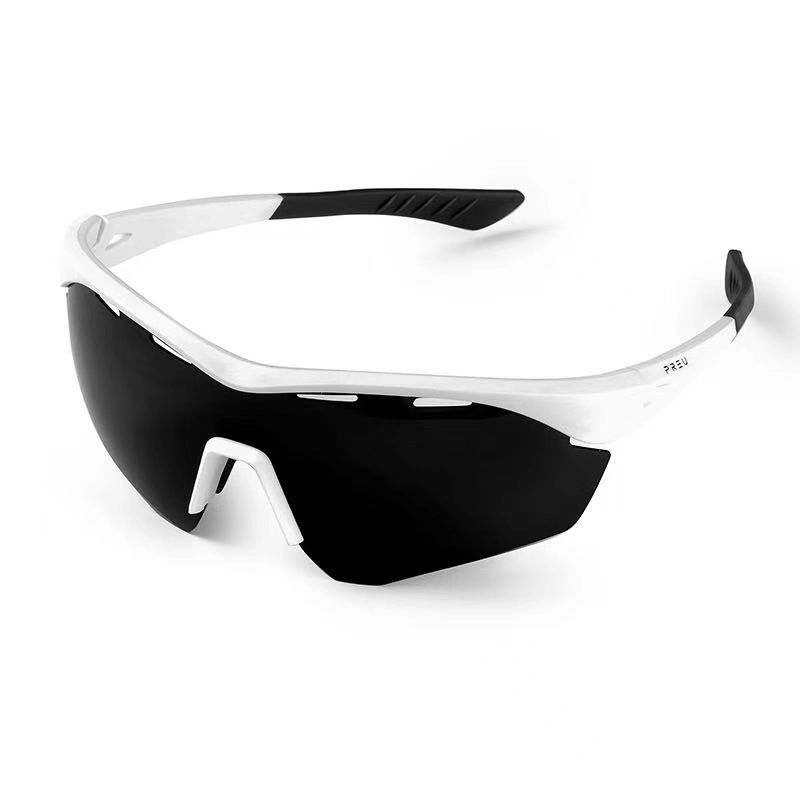
CoolPulse Elite Polarized Sports Sunglasses
Introducing the 2025 CoolPulse Polarized Sports Sunglasses, engineered for dynamic lifestyles and outdoor enthusiasts. Designed with a bold aesthetic and high-performance functionality, these sunglasses are your ultimate companion for cycling, fishing, and other high-energy activities. Available in sleek black, vibrant blue, and sophisticated gray, they offer superior wind and sun protection while elevating your style with a strikingly cool look.
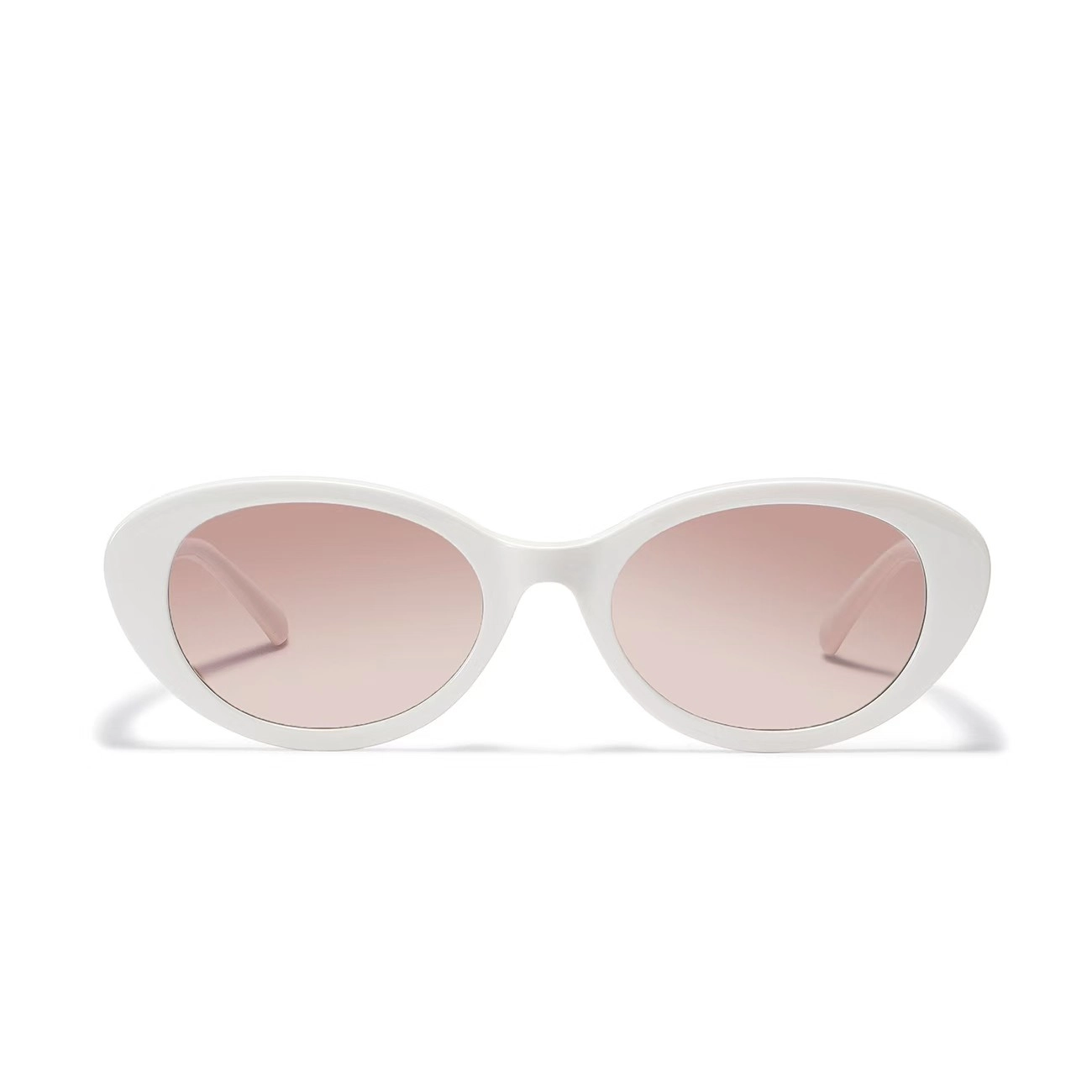
Luxury Cellulose Propionate Sunglasses—Unique Colors and Polished Finish
Submit Your Request Now!
Before diving into our services, please take a moment to fill out the corresponding form, detailing the type of eyewear you wish to import from China. Whether it's sunglasses, optical frames, reading glasses, or children’s glasses, we are committed to providing you with tailored solutions that meet your needs. Let us know your preferred materials, whether you require matching glasses case packaging, or any other specific requirements you may have.
Rest assured that your privacy is important to us, and all information provided will be handled with the utmost confidentiality.

MANUFACTURING ROOTS DATING BACK TO 1976.
Specializing in OEM and ODM eyewear manufacturing for international brands, HECHANG Optical serves customers across Europe, the United States, Japan, Australia, India, Russia, and other global markets. More about ↗
We’re here


 Scan QR Code