
Eyewear Quality Control: How Brands Can Evaluate a Manufacturer's QC Process
Understand eyewear quality control from incoming material checks to production, finished product inspection, and pre-shipment confirmation. Learn how brands can evaluate a manufacturer's QC process, inspection methods, and project-specific quality requirements.
Eyewear quality control is the process of checking products, materials, components, and production results against the requirements agreed between the buyer and manufacturer.
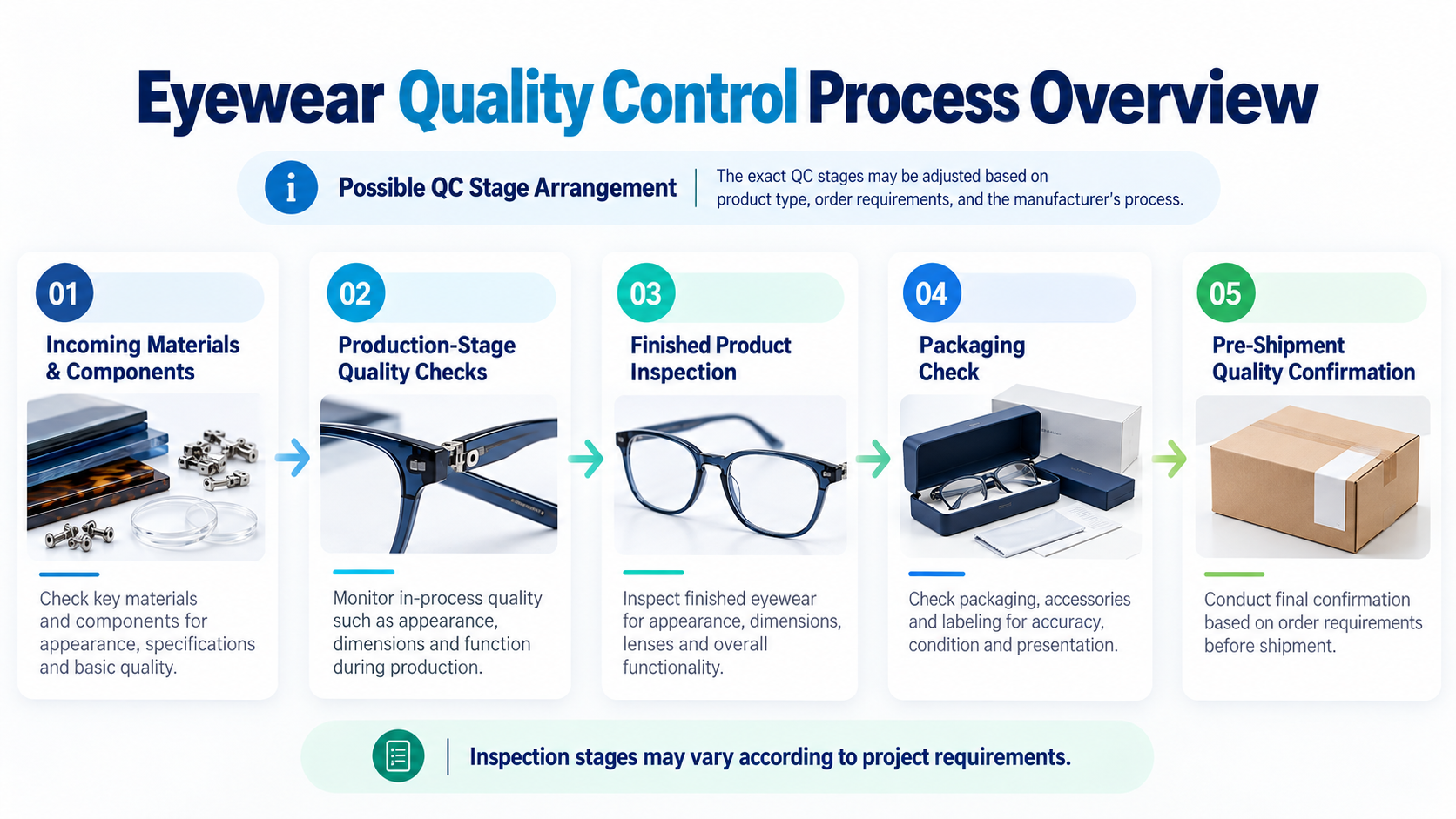
For eyewear brands, quality control is not only a final inspection before shipment. A more complete QC process can include incoming material inspection, checks during production, finished product inspection, packaging checks, and final pre-shipment confirmation.
The specific inspection steps may vary depending on the project. Buyers should therefore evaluate not only what a manufacturer checks, but also when inspections take place, what standards are used, how approved samples are referenced, and whether inspection requirements can be adjusted according to the project.
What Is Eyewear Quality Control?
Eyewear quality control refers to the inspection and evaluation activities used to determine whether eyewear products meet the requirements confirmed between the buyer and manufacturer.
Depending on the project, quality control may take place at several stages rather than only after production is complete.
For HECHANG projects, quality control may include:
Production-stage inspection is carried out according to the specific project, so buyers should not assume that every order follows exactly the same inspection sequence or frequency.
Quality Control Is Based on Confirmed Project Requirements
The purpose of QC is not simply to determine whether a product looks acceptable in general.
Product quality should be evaluated against the requirements confirmed between both parties.
For mass production, the customer-approved sample can also serve as an important quality reference when evaluating the finished product.
This gives buyers a clearer basis for comparing production results with what was previously confirmed during the development and sample approval stage.
What Should Buyers Look for in an Eyewear Manufacturer's QC Process?
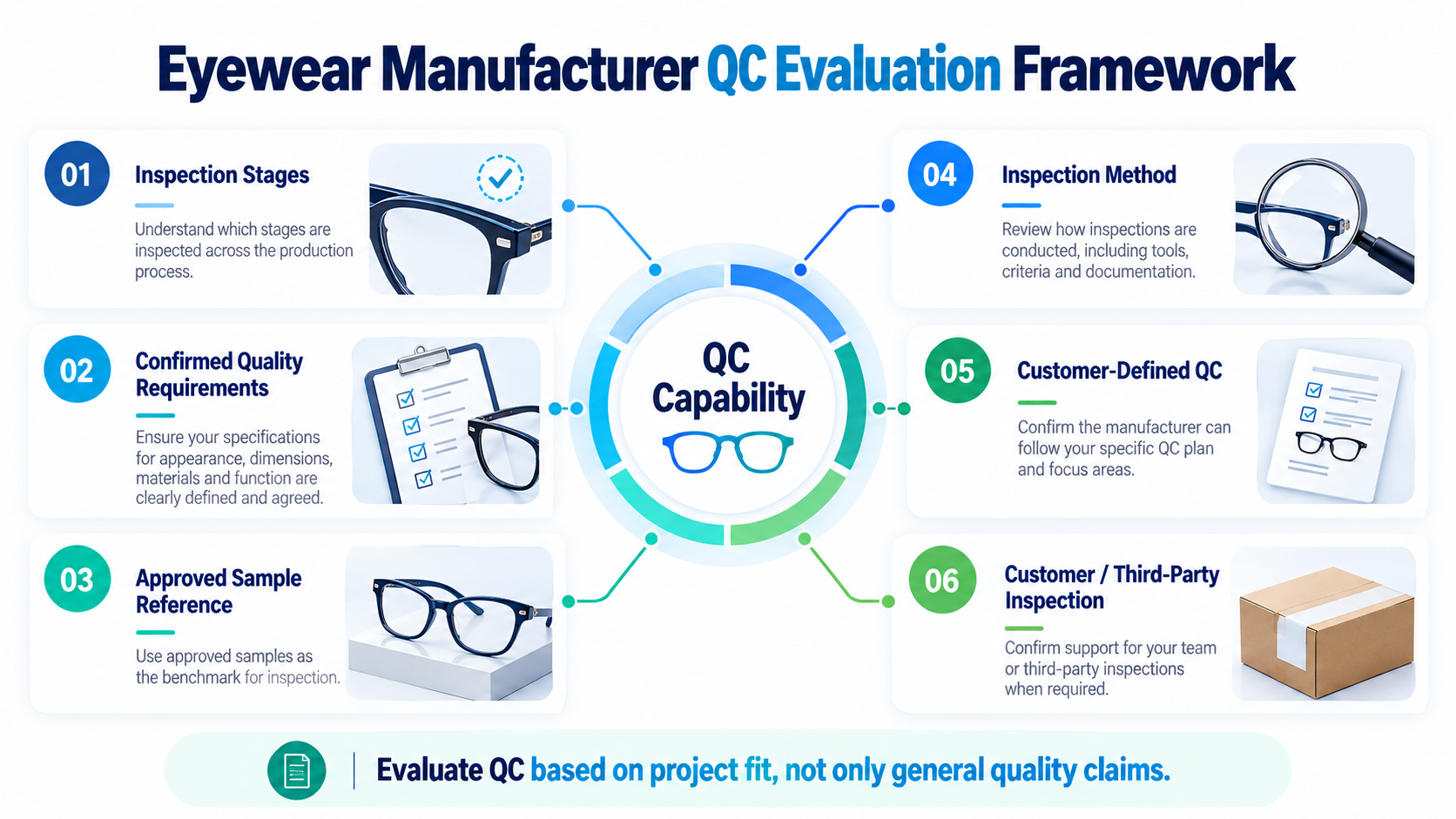
When evaluating a manufacturer's eyewear quality control capability, buyers should look beyond a general statement such as “we inspect every order.”
A more useful evaluation focuses on whether the manufacturer's QC process covers the relevant stages of the project and whether the inspection criteria can be aligned with the buyer's requirements.
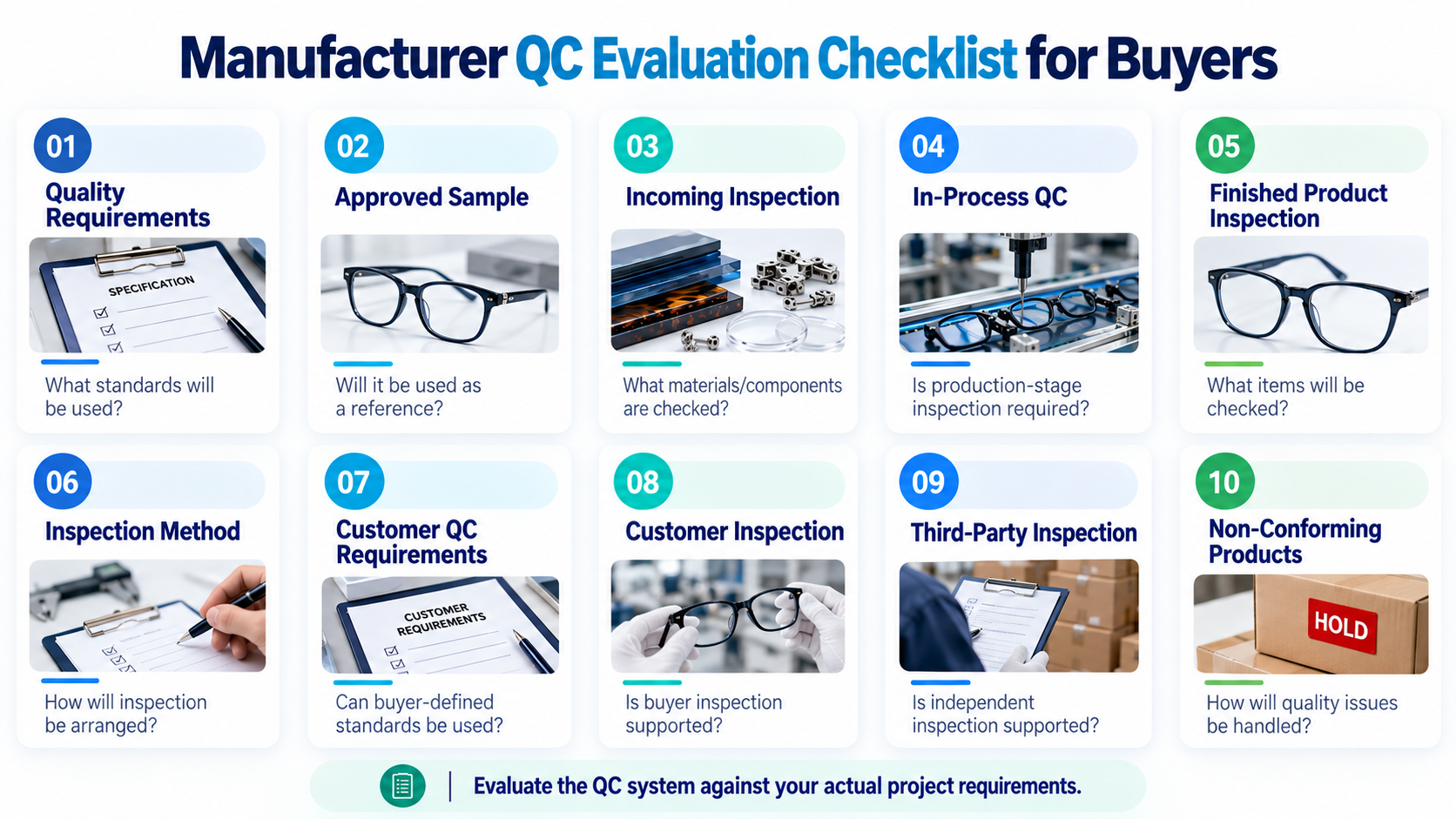
Key areas to evaluate include:
Together, these points help buyers understand whether the manufacturer's quality control process can be adapted to the requirements of a real production project.
Incoming Material and Component Inspection
Quality control can begin before mass production by checking the materials and components that will be used for the eyewear project.
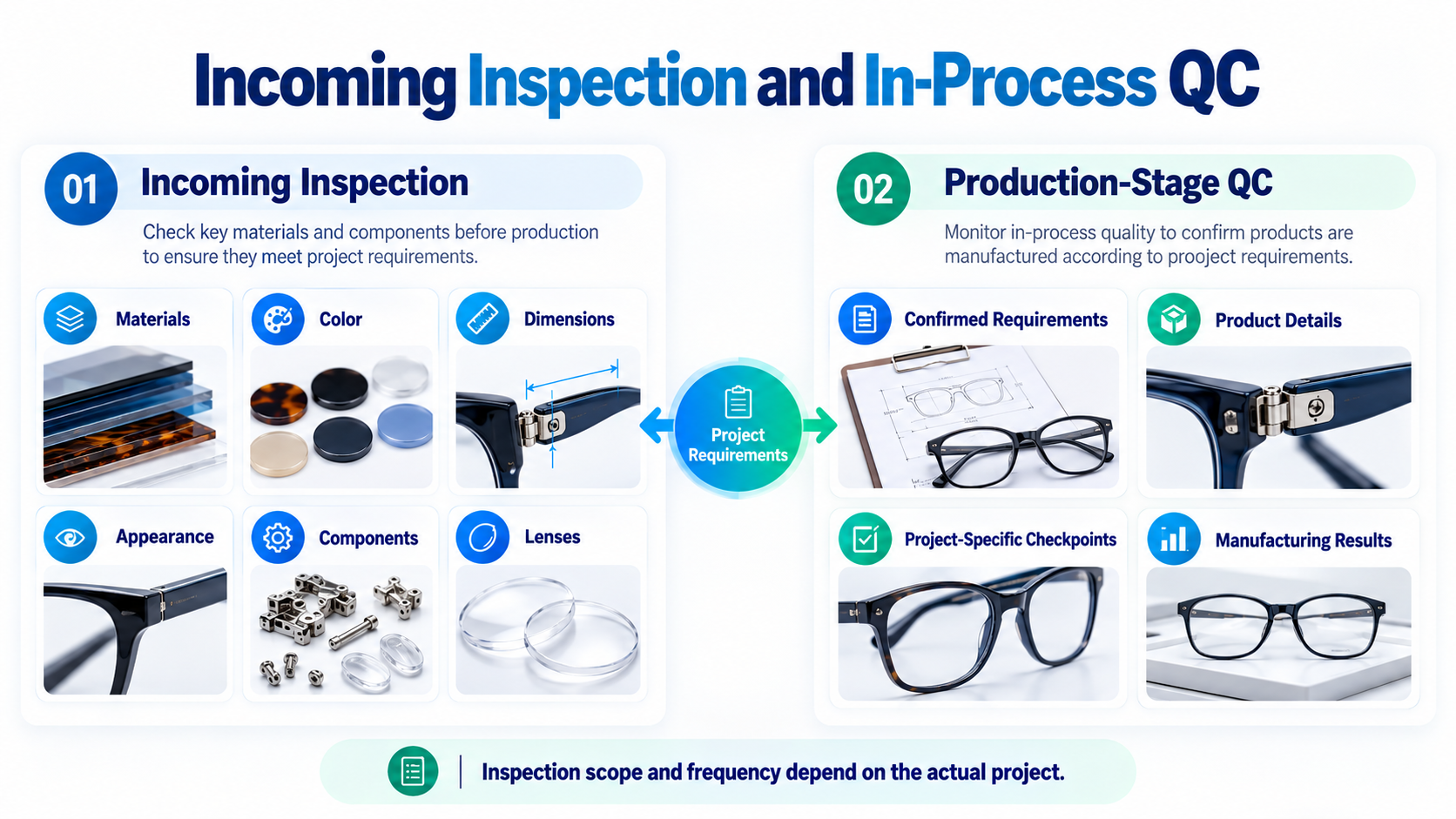
For HECHANG projects, incoming inspection may include checking:
The purpose of incoming inspection is to identify whether the materials and components supplied for the project match the confirmed requirements before they move further into production.
The exact inspection requirements depend on the product and project rather than one universal checklist for every eyewear order.
Quality Control During Production
Quality control can also take place during eyewear production.
HECHANG performs production-stage quality checks according to the requirements of the specific project.
This means the inspection approach may vary depending on the product, production requirements, and the points that need additional attention during manufacturing.
Buyers should therefore ask how production-stage QC will be arranged for their actual project rather than assuming that every order follows the same fixed inspection frequency, process checkpoints, or sampling ratio.
Why Production-Stage QC Matters
Production-stage inspection provides another opportunity to compare manufacturing results with the requirements already confirmed for the project.
Production-stage QC should focus on inspection activities that are relevant to the product being manufactured and the quality risks that need to be controlled.
A project-specific approach allows the manufacturer and buyer to focus on the requirements that matter for the actual eyewear product.
How Approved Samples Support Mass Production Quality Control
An approved sample gives both the buyer and manufacturer a practical product reference before mass production.
For HECHANG projects, mass production is evaluated against the customer-approved sample and the requirements confirmed between both parties.
This helps connect the sample approval stage with later production quality control.
The approved sample may help buyers and manufacturers compare important product details such as appearance, color, structure, logo presentation, lenses, components, and other confirmed requirements.
The approved sample does not replace all inspection requirements. Instead, it provides an agreed reference that can support the evaluation of mass-produced eyewear.
The customer-approved sample provides a reference for mass production, while the sample approval process helps buyers confirm product details before production begins.
Finished Eyewear Quality Inspection
After production, finished eyewear should be evaluated against the confirmed product requirements.
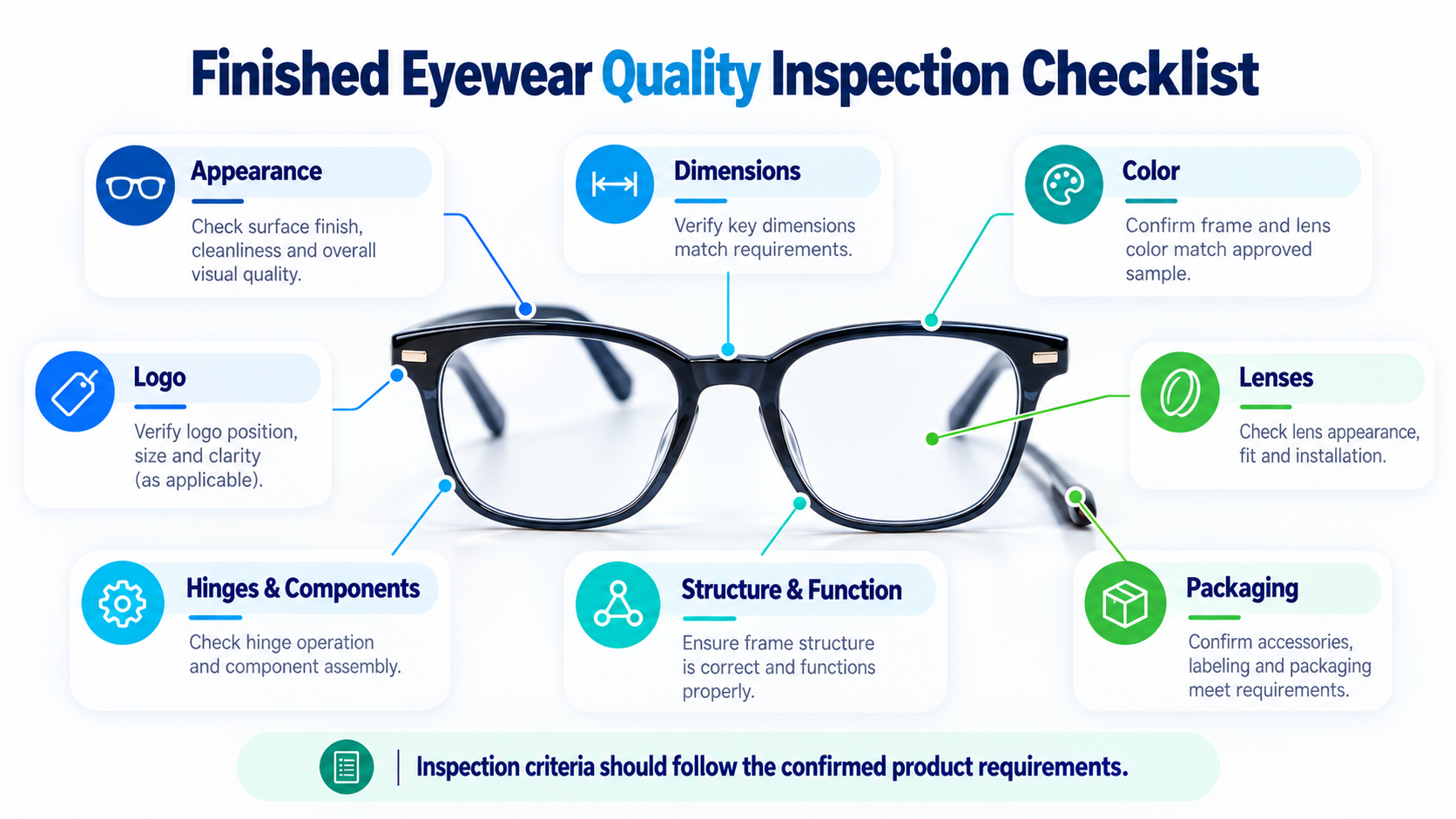
For HECHANG projects, finished product inspection may include:
These inspection items help buyers verify whether the finished eyewear is consistent with the approved product requirements before shipment.
Appearance and Color
Appearance and color can be checked against the confirmed product requirements and the customer-approved sample.
The purpose is to identify whether the finished product matches what was agreed during development and sample approval.
Dimensions and Structure
Dimensions and product structure are also part of finished eyewear quality inspection.
The applicable requirements should be based on the specifications confirmed for the project.
Lenses
Lens inspection forms part of the finished product quality evaluation when lenses are included in the eyewear project.
The specific inspection requirements depend on the lens and product requirements confirmed between both parties.
Logo
Logo presentation can be checked to determine whether the finished product matches the branding requirements confirmed for the order.
Hinges, Components and Function
Hinges, components, product structure, and function can also be checked as part of finished product inspection.
The applicable inspection points depend on the specific eyewear product and project requirements.
Packaging and Pre-Shipment Quality Checks
Quality control should not stop immediately after the eyewear itself has been inspected.
HECHANG also performs inspection before packaging and final quality confirmation before shipment.
At the pre-shipment stage, confirmed inspection items may include:
This final stage helps confirm whether the finished order is consistent with the agreed requirements before shipment arrangements proceed.
Pre-shipment quality confirmation should be understood as one stage within the wider quality control process rather than the entire QC system.
Final quality confirmation is one part of pre-shipment verification ; buyers should also confirm the shipment-specific requirements before approving shipment.
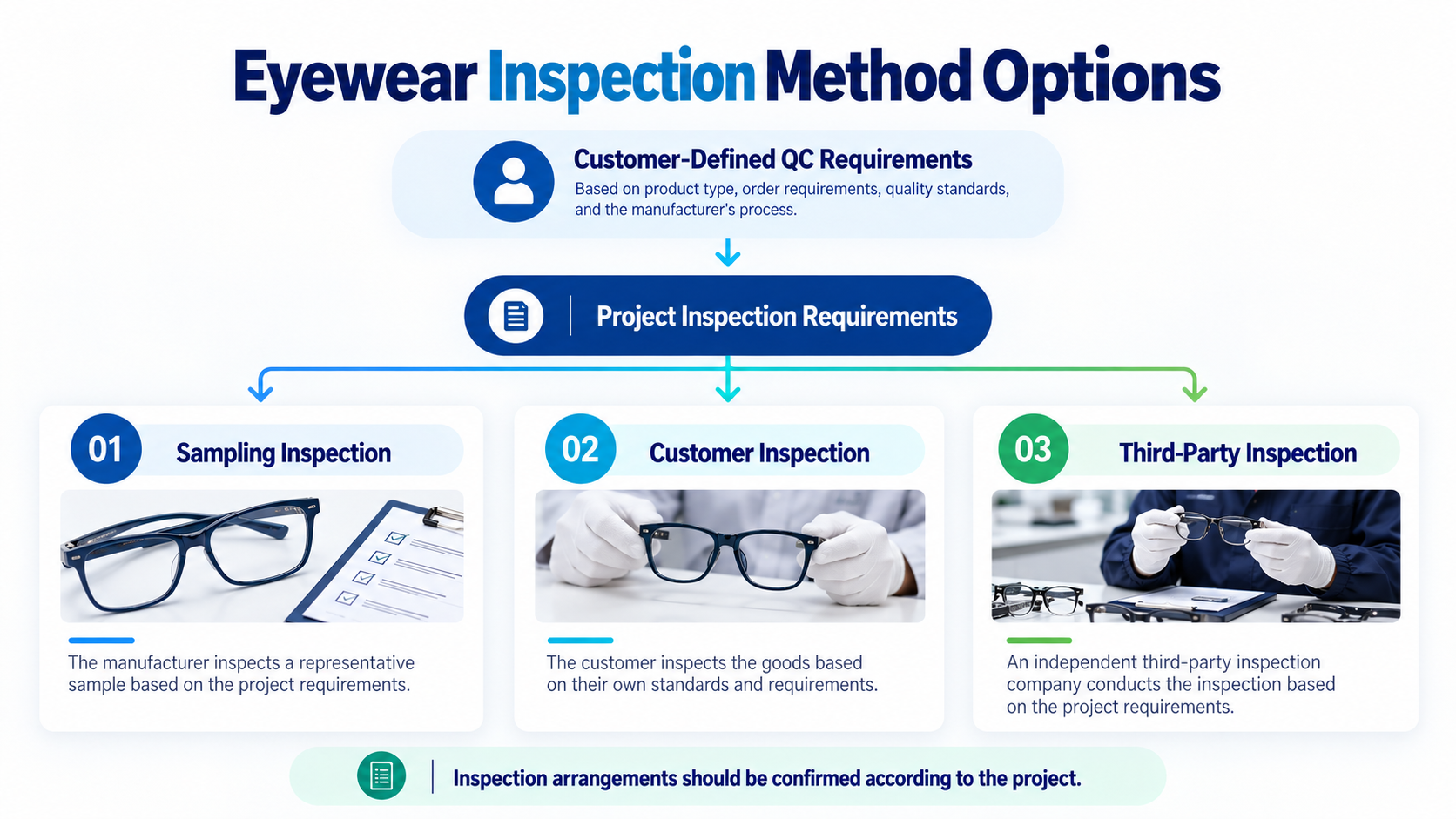
Sampling Inspection, Customer Requirements and Third-Party Inspection
The inspection method is another important point for brands to confirm when evaluating a manufacturer.
HECHANG generally uses sampling inspection, while the inspection approach can also be determined according to customer requirements.
HECHANG does not use one fixed publicly stated AQL rule for every order.
If a buyer has specific inspection standards or requirements, these can be discussed and confirmed according to the project.
Customer-Defined QC Requirements
HECHANG supports customer-specified quality control requirements.
This allows buyers to communicate inspection expectations before production and determine whether additional or project-specific requirements need to be included.
Customer Inspection
HECHANG supports customer inspection.
For brands that want to participate directly in final quality confirmation, the inspection arrangement can be discussed according to the project.
Third-Party Inspection
Third-party inspection is also supported.
This can be relevant for buyers that use independent inspection companies or external QC teams as part of their supplier management process.
The applicable inspection requirements should be confirmed before the inspection is arranged.
How Are Non-Conforming Products Handled?
If a product does not meet the confirmed quality requirements, the appropriate handling method depends on the actual issue and the project requirements.
HECHANG determines how non-conforming products should be handled according to the specific problem.
There is not one fixed public process that should be assumed for every type of quality issue.
Supplier evaluation should consider whether the manufacturer can identify a quality issue, compare it against the confirmed requirements, and determine an appropriate response based on the actual situation.
How Brands Can Evaluate a Manufacturer's Quality Control Capability
A manufacturer's QC capability should be evaluated by looking at the complete quality control approach rather than one inspection checklist.
Brands can focus on several practical questions.
Does the QC Process Cover Multiple Stages?
A broader quality control process may include incoming inspection, production-stage checks, finished product inspection, packaging checks, and pre-shipment confirmation.
Buyers should confirm which stages apply to their specific project.
Are Quality Requirements Confirmed Before Production?
The manufacturer should be able to explain what requirements will be used when evaluating the finished product.
For HECHANG projects, product quality is judged according to the requirements confirmed between both parties, with the customer-approved sample used as an important mass-production reference.
Can the Inspection Method Match the Project?
A useful QC system should not depend only on one fixed inspection method regardless of the product.
HECHANG generally uses sampling inspection, and inspection arrangements can also be confirmed according to customer requirements.
Can the Buyer Define Additional QC Requirements?
Buyers with their own quality requirements should confirm whether the manufacturer can incorporate those requirements into the project.
HECHANG supports customer-specified QC standards according to the agreed project requirements.
Does the Manufacturer Support Independent Verification?
Support for customer inspection and third-party inspection gives buyers additional options for verifying product quality before shipment.
This can be particularly important for brands and importers that use external QC procedures as part of their supplier management process.
Questions Buyers Should Ask Before Production
Before production begins, brands can use the following questions to better understand how quality control will be handled for their project.
These questions help buyers evaluate whether the manufacturer's QC process can be aligned with the requirements of the actual eyewear project rather than relying only on general quality claims.
Planning Quality Control With HECHANG Optical
HECHANG’s eyewear quality control process can include incoming inspection, production-stage quality checks according to the project, finished product inspection, packaging checks, and final pre-shipment quality confirmation.
Mass production is evaluated against the customer-approved sample and the requirements confirmed between both parties.
HECHANG generally uses sampling inspection, while specific inspection requirements can also be confirmed according to customer needs.
Customer inspection, third-party inspection, and customer-defined QC requirements are supported.
QC capability is one part of the broader process used to evaluate an eyewear manufacturer before starting a project.
The eyewear manufacturing process provides the production context for where different quality checks may take place.
Brands with project-specific development requirements can coordinate them through HECHANG’s Custom / OEM & ODM Eyewear service.
Discuss Your Eyewear Quality Requirements
If your eyewear project has specific quality control or inspection requirements, share them with HECHANG Optical before production.
Inspection requirements, approved sample references, customer QC standards, and final quality confirmation arrangements can be discussed according to the specific project.
Discuss Your Eyewear ProjectFAQ
What is eyewear quality control?
Eyewear quality control refers to the inspection and evaluation activities used to determine whether eyewear products, materials, components, and production results meet the requirements confirmed between the buyer and manufacturer. Quality control may take place at different stages, including incoming inspection, production-stage checks, finished product inspection, packaging checks, and final pre-shipment quality confirmation.
What should buyers look for in an eyewear manufacturer's QC process?
Buyers should evaluate whether the manufacturer's QC process covers multiple production stages and whether the inspection criteria can be aligned with the requirements of the actual project. Important points include: - Incoming material and component inspection; - Production-stage quality checks; - Finished product inspection; - Packaging and pre-shipment checks; - Use of the customer-approved sample as a production reference; - Sampling inspection methods; - Support for customer-defined QC requirements; - Customer or third-party inspection.
What does HECHANG check during incoming inspection?
For HECHANG projects, incoming inspection may include checking: - Materials; - Colors; - Dimensions; - Appearance; - Components; - Lenses. The exact inspection requirements depend on the specific product and project.
Does HECHANG perform quality control during production?
Yes. HECHANG performs production-stage quality checks according to the requirements of the specific project. The inspection approach may vary depending on the product and production requirements, so there is no single fixed inspection frequency, process checkpoint, or sampling ratio that applies to every order.
How is an approved sample used in eyewear quality control?
For HECHANG projects, mass production is evaluated against the customer-approved sample and the requirements confirmed between both parties. The approved sample provides an important reference for comparing product details during mass production, but it does not replace all inspection requirements.
What is checked during finished eyewear inspection?
For HECHANG projects, finished product inspection may include: - Appearance; - Dimensions; - Color; - Lenses; - Logo; - Hinges and components; - Structure; - Function; - Packaging. The applicable inspection requirements should be based on the confirmed project requirements.
Does HECHANG use AQL for every eyewear order?
HECHANG does not use one fixed publicly stated AQL rule for every order. HECHANG generally uses sampling inspection, while the specific inspection method and quality requirements can also be confirmed according to the project or customer requirements.
Can buyers provide their own QC requirements?
Yes. HECHANG supports customer-defined quality control requirements. Buyers can communicate their inspection expectations before production so that the applicable QC requirements can be confirmed according to the project.
Does HECHANG support customer inspection and third-party inspection?
Yes. HECHANG supports both customer inspection and third-party inspection. The inspection arrangement and applicable requirements should be confirmed according to the specific project before the inspection takes place.
How are non-conforming eyewear products handled?
Non-conforming products are handled according to the specific quality issue and project requirements. HECHANG does not use one fixed public handling process for every type of defect or non-conformance. The appropriate response depends on the actual problem and the requirements confirmed for the project.
Is pre-shipment inspection the same as the entire QC process?
No. Pre-shipment quality confirmation is one stage within the wider eyewear quality control process. A more complete QC process may also include incoming inspection, production-stage checks, finished product inspection, and packaging checks before the final pre-shipment confirmation.
How can a brand evaluate an eyewear manufacturer's QC capability?
Brands should evaluate whether the manufacturer can: - Apply quality control across relevant production stages; - Use confirmed project requirements as the quality basis; - Use the customer-approved sample as a mass-production reference; - Adjust inspection arrangements according to the project; - Support customer-defined QC requirements; - Support customer or third-party inspection. The goal is to determine whether the manufacturer's QC process can match the actual requirements of the project rather than relying only on general quality claims.
Eyewear MOQ Explained: What Brands Should Know Before Ordering
Eyewear Manufacturers and Suppliers Guide for Brands and Importers
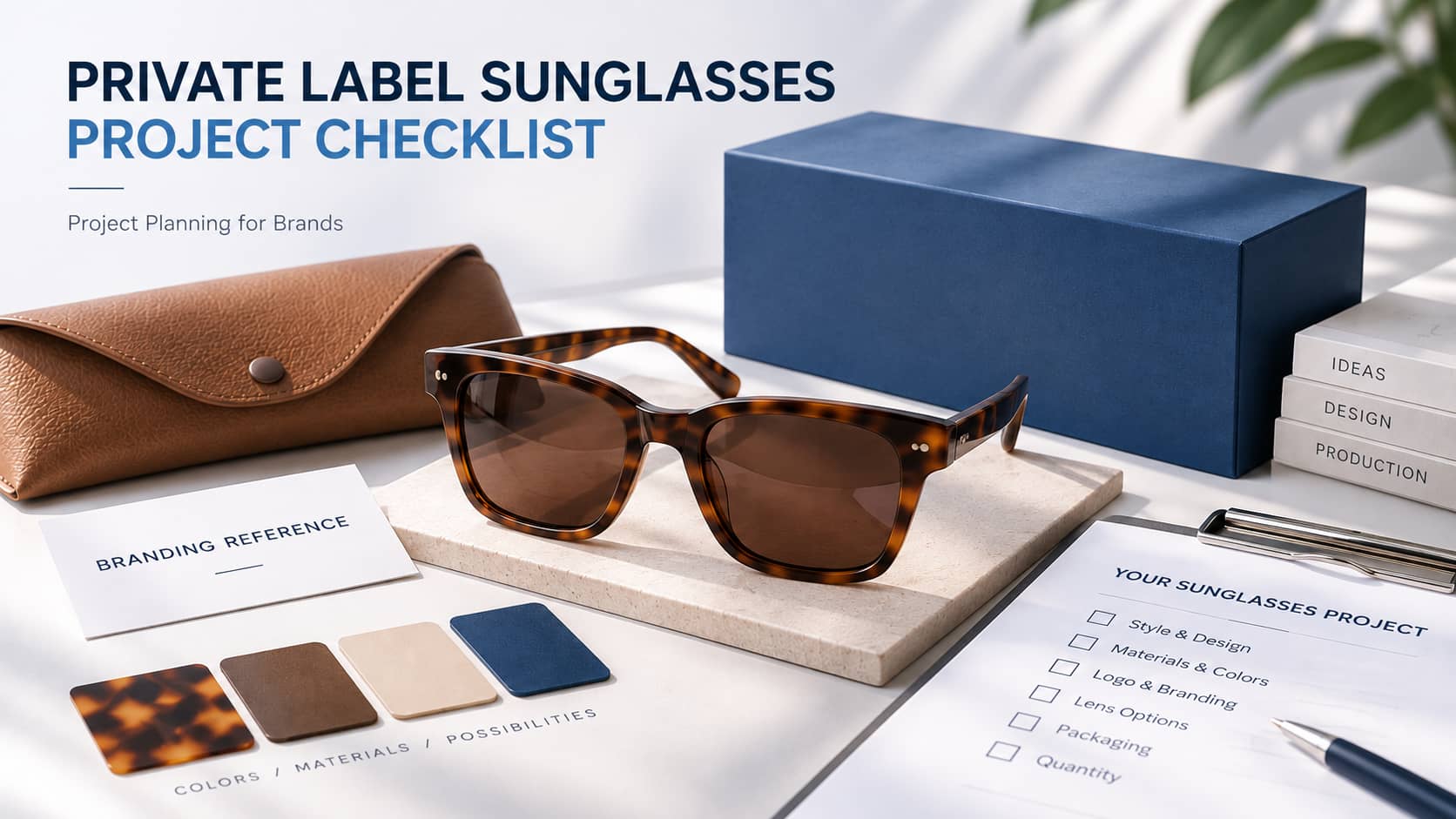
Private Label Sunglasses Project Checklist: What Brands Should Confirm Before Starting
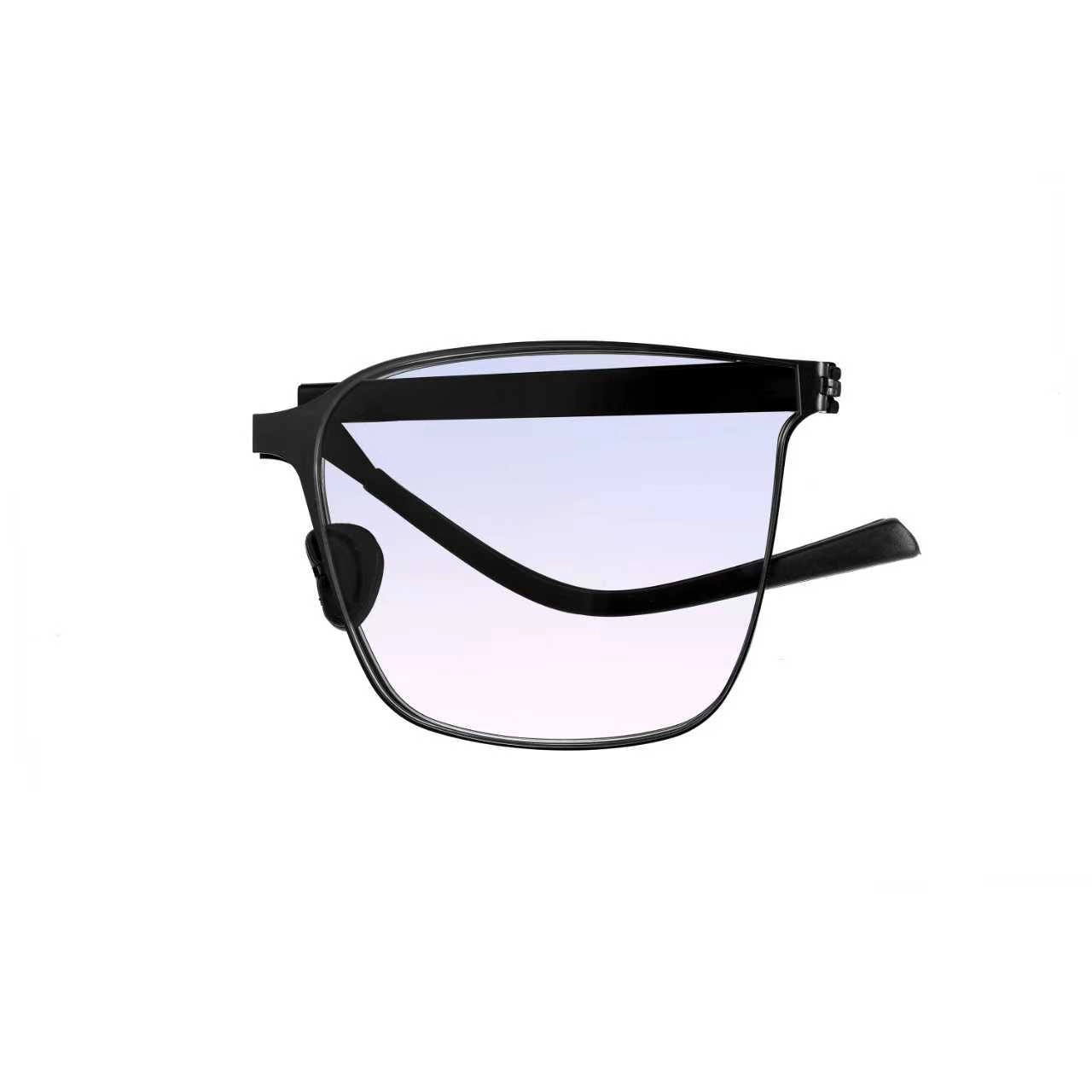
Lightweight Fashion Foldable Card Polarized Sunglasses
Foldable sunglasses----These 2025 foldable card polarized sunglasses combine cutting-edge design with practical functionality, tailored for modern consumers seeking style and portability. Featuring ultra-thin folding technology, weighing only 16 grams, and folding down to a slim 1.6 cm thickness, they easily fit into a pocket or small bag, making them ideal for daily commutes, travel, or outdoor activities. Equipped with high-quality polarized lenses, they offer superior UV protection and clear vision, ensuring comfort and style under the sun.
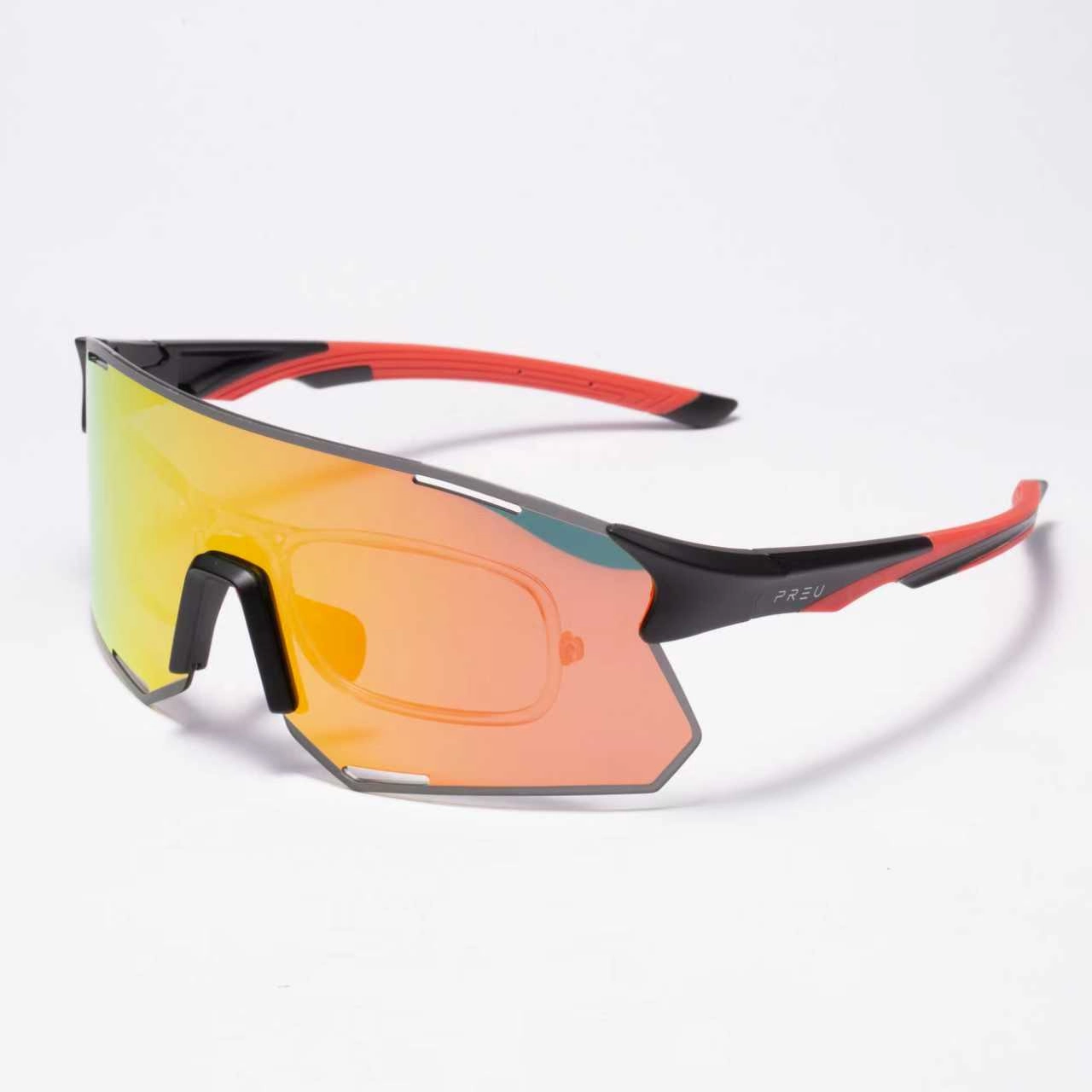
Wave VisionPro Dual-Layer Polarized Sports Sunglasses
The 2025 Hechang VisionPro Dual-Layer Polarized Sports Sunglasses are designed for active individuals who refuse to let vision challenges hold them back. Featuring an innovative dual-layer lens system, these sunglasses allow nearsighted users to seamlessly integrate prescription lenses into the inner layer, ensuring crystal-clear vision during high-energy activities like skiing, skydiving, and ice skating. With superior polarized protection and a bold, sporty aesthetic, these sunglasses empower everyone to enjoy outdoor adventures worry-free.
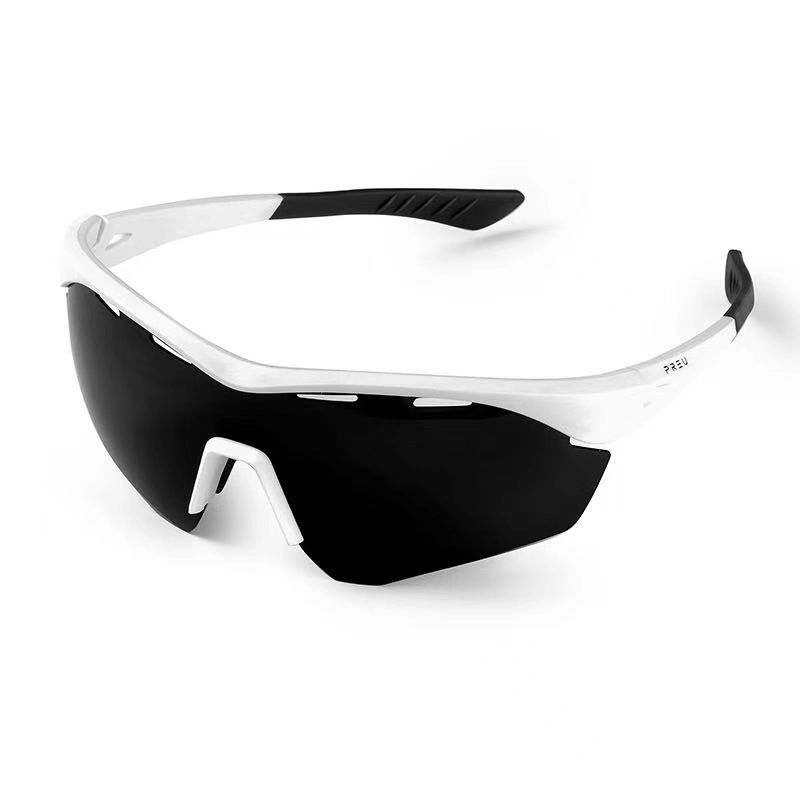
CoolPulse Elite Polarized Sports Sunglasses
Introducing the 2025 CoolPulse Polarized Sports Sunglasses, engineered for dynamic lifestyles and outdoor enthusiasts. Designed with a bold aesthetic and high-performance functionality, these sunglasses are your ultimate companion for cycling, fishing, and other high-energy activities. Available in sleek black, vibrant blue, and sophisticated gray, they offer superior wind and sun protection while elevating your style with a strikingly cool look.
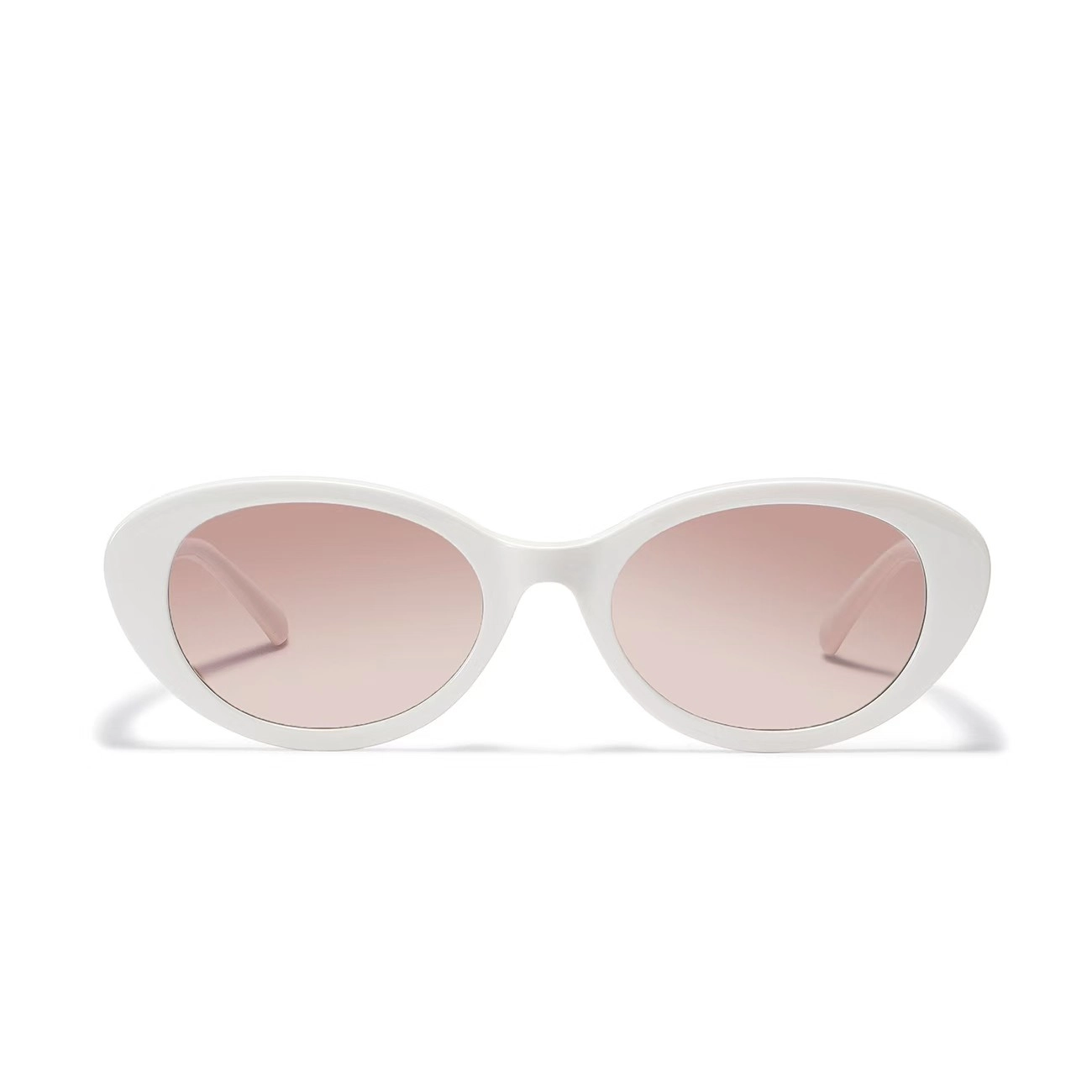
Luxury Cellulose Propionate Sunglasses—Unique Colors and Polished Finish
Submit Your Request Now!
Before diving into our services, please take a moment to fill out the corresponding form, detailing the type of eyewear you wish to import from China. Whether it's sunglasses, optical frames, reading glasses, or children’s glasses, we are committed to providing you with tailored solutions that meet your needs. Let us know your preferred materials, whether you require matching glasses case packaging, or any other specific requirements you may have.
Rest assured that your privacy is important to us, and all information provided will be handled with the utmost confidentiality.

MANUFACTURING ROOTS DATING BACK TO 1976.
Specializing in OEM and ODM eyewear manufacturing for international brands, HECHANG Optical serves customers across Europe, the United States, Japan, Australia, India, Russia, and other global markets. More about ↗
We’re here


 Scan QR Code