
Custom Eyewear Manufacturing Checklist: What Should Buyers Provide to the Factory?
A practical B2B checklist for eyewear brands and buyers preparing a custom eyewear project. Learn what information to organize before contacting a factory, including design references, materials, dimensions, branding, lens requirements, packaging, and purchasing requirements.
What should a buyer prepare before contacting an eyewear factory for a custom project?
The short answer: provide enough information for the factory to understand what you want to make, how much customization the project requires, and which product or purchasing requirements are already fixed.
Not every detail has to be finalized during the first conversation.
For HECHANG Optical, an initial discussion can begin with available design artwork and branding information. A physical sample or 2D drawing can also be used as part of the initial project discussion.
Before starting a custom eyewear project, buyers should also understand how to select a suitable eyewear manufacturer for their project requirements.
However, the information needed to start a conversation is not necessarily enough to prepare a complete quotation, and a quotation is not the same as the final specification used for production.
A buyer should therefore prepare enough information to make the project understandable while clearly identifying which details are confirmed, preferred, or still open for discussion.
1. First, Identify the Type of Custom Eyewear Project
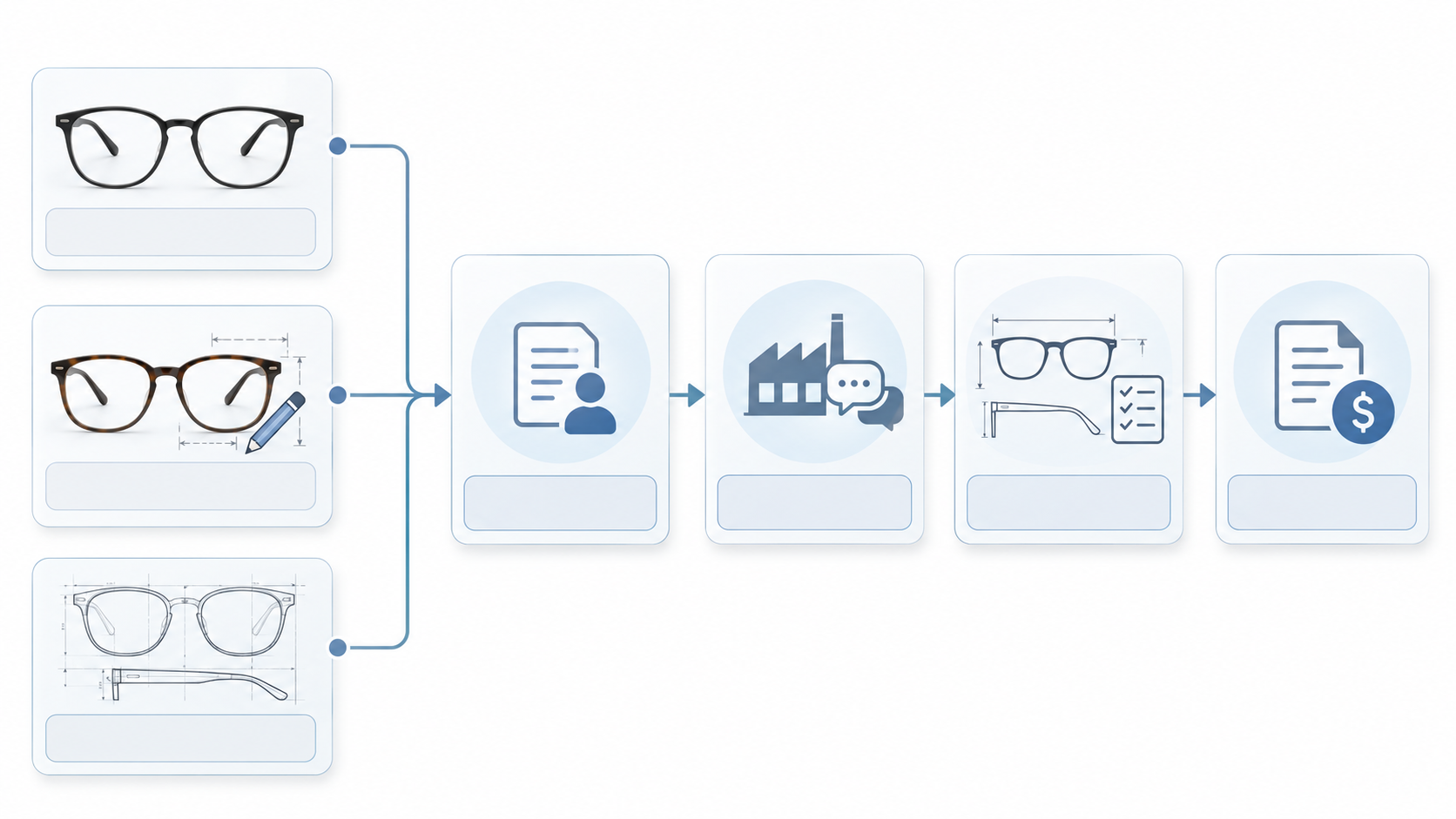
For project-planning purposes, custom eyewear projects can generally be grouped into three common development routes.
These are practical planning categories rather than universal industry definitions.
Existing Product / Private Label
The project starts from an existing eyewear product, with customization focused mainly on branding or selected product details.
Buyers starting from an existing product can first explore HECHANG's existing eyewear styles before defining the required customization.
Modified Existing Design
The project starts from an existing product, physical reference, or design direction but requires specified changes.
Full Custom Development
The project starts from a new product direction and requires more product information to be defined before the specifications are ready for production.
Buyers who need broader product development support can also review HECHANG's custom eyewear development services.
The important point is not the terminology itself. It is the relationship between:
Project type → level of buyer input required.
| Project Type | Typical Starting Point | Useful Information for the Initial Discussion | Information Needed Before a Complete Quotation |
|---|---|---|---|
| Existing Product / Private Label | Existing eyewear product | Branding artwork, intended logo placement and size, and relevant product references | Confirmed materials, dimensions, customization processes, packaging, and other purchasing requirements that affect pricing |
| Modified Existing Design | Existing product, physical sample, or design to be changed | Physical sample and/or 2D drawing, branding information, and requested changes | More complete materials, dimensions, processing details, packaging, and purchasing requirements |
| Full Custom Development | New product direction | Available design artwork, 2D drawing and/or physical reference where applicable, plus branding requirements | More complete product specifications needed to determine materials, manufacturing requirements, and final pricing |
The exact amount of information required still depends on the individual project.
2. Initial Inquiry, Complete Quotation, and Final Production Specifications Are Different
Buyers sometimes make one of two mistakes.
The first is contacting a factory with almost no usable product information.
The second is assuming that every technical and production detail must be finalized before any discussion can begin.
For a custom eyewear project, it is more useful to separate the information by project stage.
Initial Inquiry
The purpose of an initial inquiry is to help the factory understand the project direction.
For HECHANG, available design artwork and branding information are useful starting materials. Depending on the project, a physical sample or 2D drawing can also provide an initial reference.
At this stage, some specifications may still be open.
Complete Quotation
A complete quotation requires more complete product information.
HECHANG has confirmed that materials and manufacturing processes are among the important factors that can affect pricing.
Where applicable, processing requirements such as laser marking or engraving may also influence the quotation.
Dimensions, branding requirements, packaging, and other buyer-specific purchasing requirements may also need to be clarified before final pricing can be prepared.
Final Production Specifications
Final production specifications should describe the product that has actually been confirmed for production.
Information used to start an initial conversation should therefore not automatically be treated as the final production specification.
As the project progresses, open requirements need to be clarified and confirmed before production.
3. Product Concept and Reference Materials
Information to provide
Start by explaining what you want to make.
- Product type
- Intended product use
- Available design artwork
- Physical reference sample
- 2D drawing
- Existing product or design reference
- Details you want to retain
- Details you want to change
If another product is being used as a reference, clearly explain which characteristics are only being used to communicate a design or construction direction and which elements need to be changed.
Reference materials should help clarify a project, not be treated as automatic permission to reproduce another company's protected design.
Why the factory needs it
Descriptions such as “premium sunglasses,” “fashion eyewear,” or “sports glasses” can refer to very different products.
A clear drawing or physical reference can communicate shape, proportions, construction, and design direction more accurately than a short written description alone.
What if it is not finalized yet?
Confirmed requirements — details that should not change.
Preferred requirements — your current preference, but alternatives may still be considered.
Open items — details that still require discussion.
4. Design and Product Documentation
Information to provide
For an initial HECHANG project discussion, buyers should provide the available design artwork and branding information.
HECHANG has also confirmed that a physical sample or 2D drawing can be used as part of the initial communication for a custom project.
The objective is to give the factory a clear reference for the product being discussed.
For buyers preparing a new project, understanding the requirements for custom eyewear manufacturing can help organize product information before discussing details with a factory.
Why the factory needs it
Product documentation reduces ambiguity.
It helps the factory understand the intended product and identify which specifications are already clear and which still need to be confirmed.
What if you do not have a complete tech pack?
A complete tech pack is not necessarily required simply to begin an initial discussion with HECHANG when suitable project references are already available.
A physical sample or 2D drawing can provide a starting point for communication.
More detailed specifications will still need to be confirmed as the project progresses.
5. Materials and Component Requirements
Information to provide
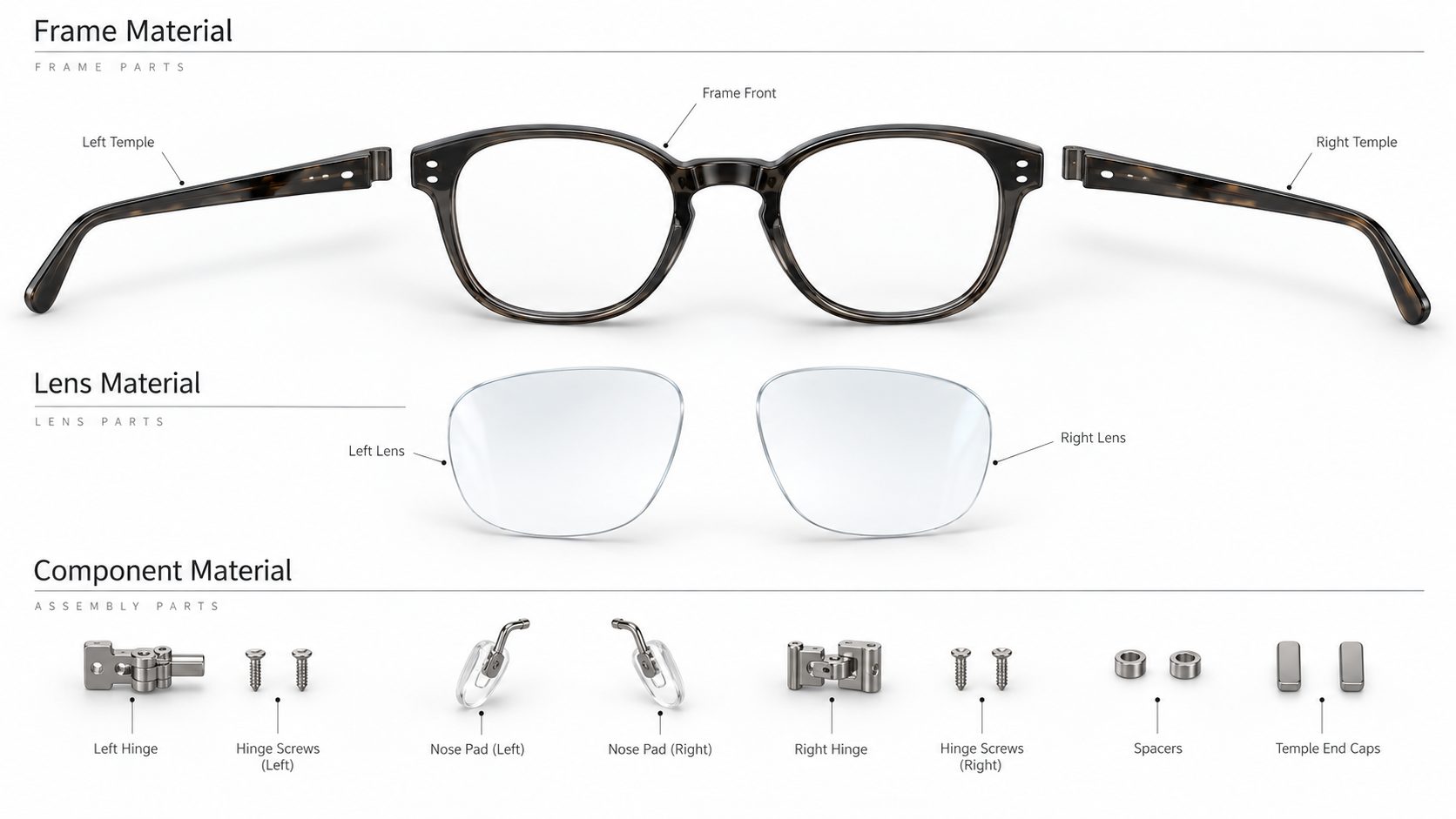
If materials have already been selected, tell the factory what you want to use.
- Frame material
- Lens material
- Materials for relevant small components
- Other material requirements included in the buyer's purchasing specification
Why the factory needs it
Material choices can affect the product structure, manufacturing approach, and quotation.
HECHANG has specifically identified materials as one of the important factors that can affect pricing.
What if the material is not finalized yet?
Do not choose a material only to make the project brief look complete.
Clearly identify which material requirements are already confirmed and which are still open for discussion.
If a specific performance requirement is important to the project, communicate the requirement separately and confirm the appropriate material or product specification before making a performance claim.
6. Dimensions and Fit Requirements
Information to provide
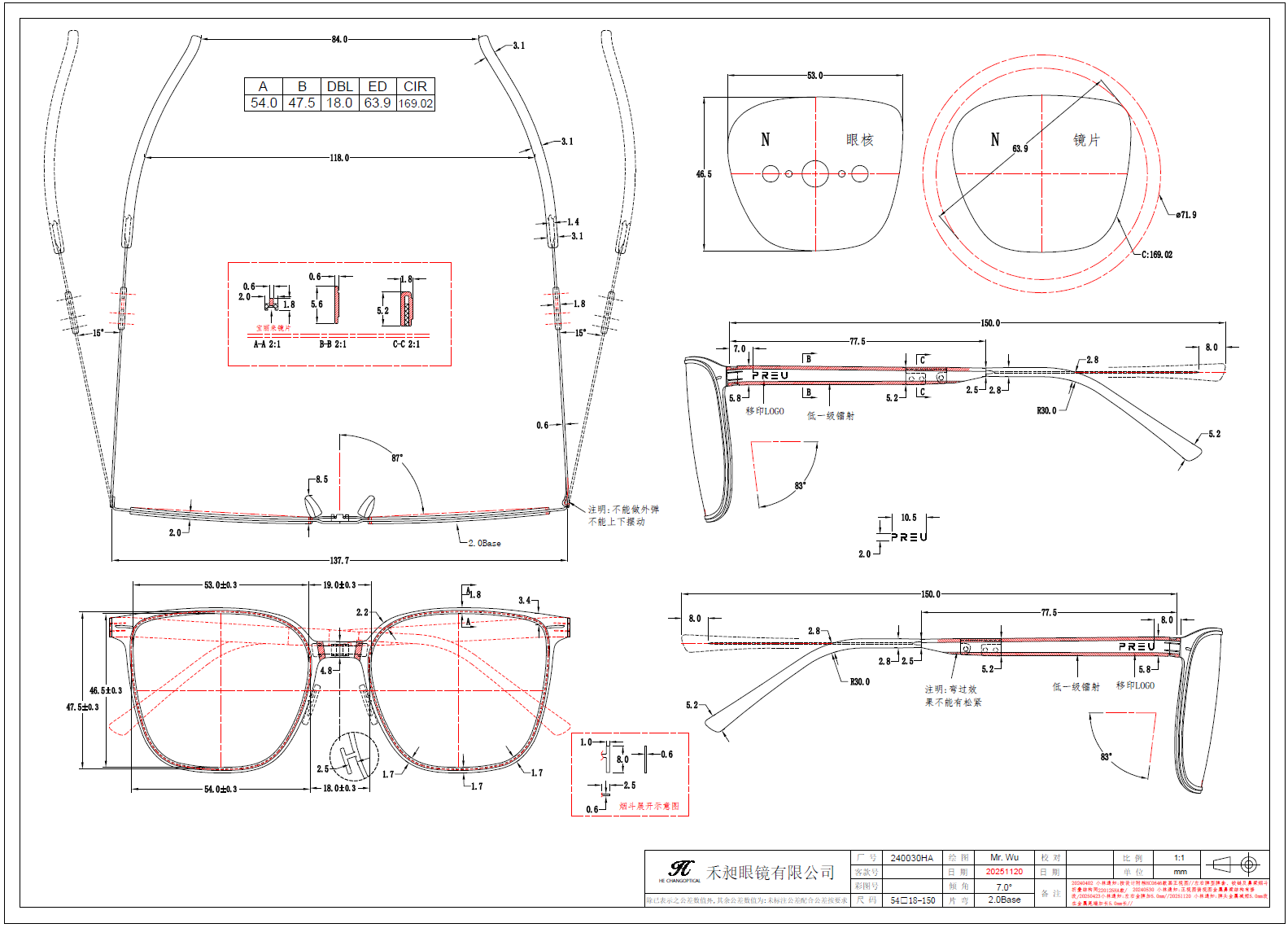
Provide the dimensions that are already important to the product.
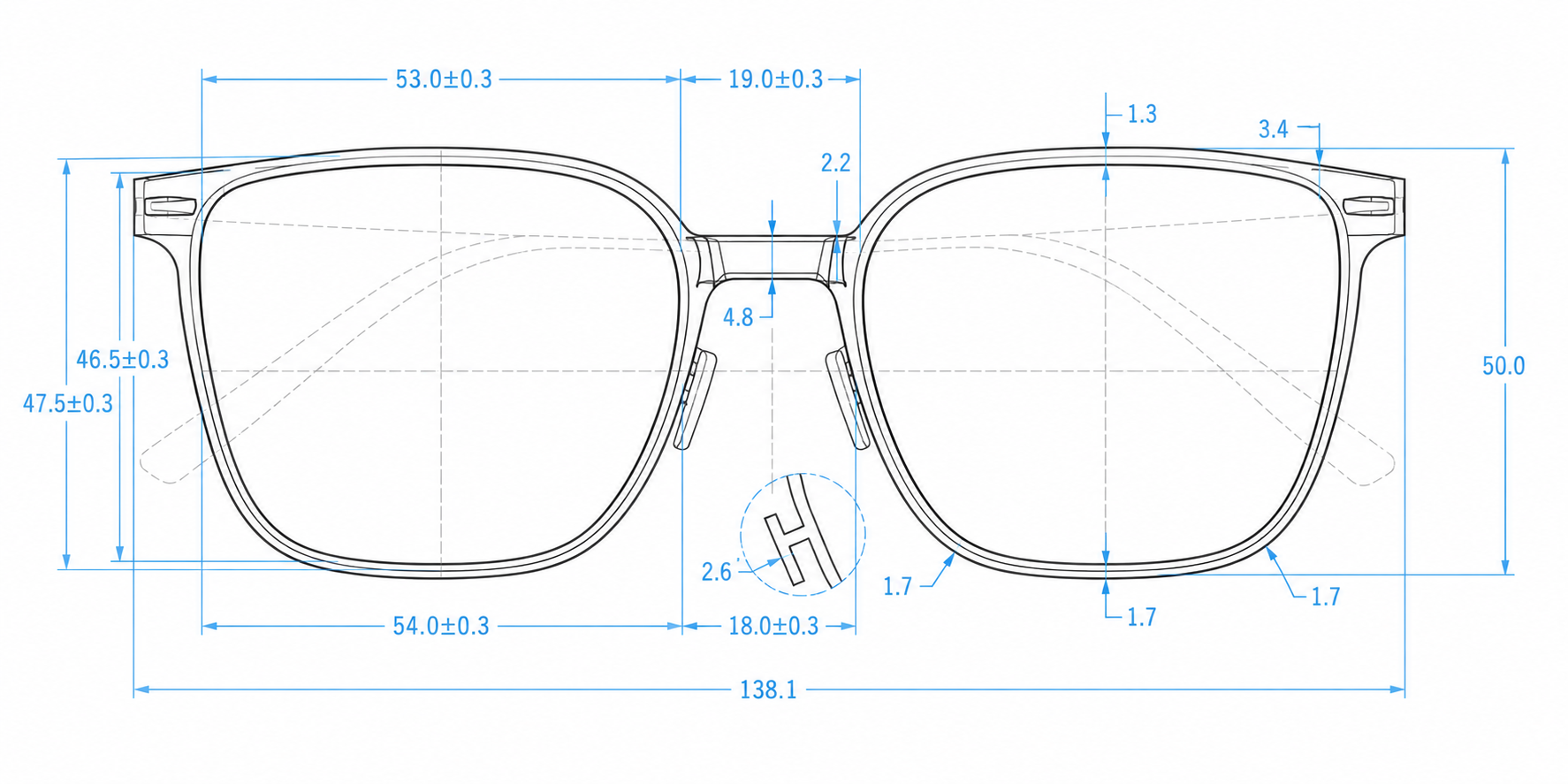
- Lens width
- Lens height
- Bridge width
- Overall frame width
- Temple length
- Other product-specific measurements
HECHANG has confirmed that product dimensions are among the information buyers may need to specify.
Why the factory needs it
Two frames can appear similar in photographs while having very different proportions.
Clear measurements reduce the risk of the buyer and factory interpreting the same reference product differently.
Dimensions also need to be considered together rather than as isolated numbers.
What if the dimensions are not finalized yet?
Provide the measurements that are already confirmed and identify the remaining dimensions as open items.
If a physical sample represents the fit or proportions you want, explain which characteristics of that sample should be used as references.
Avoid unsupported assumptions about universal national or regional face-size standards.
7. Branding, Logo, Color, and Finish
Information to provide
- Logo artwork
- Intended logo placement
- Required logo size
If product colors or surface finishes have already been defined, include those requirements as well.
Why the factory needs it
Logo size, placement, materials, and the required application method can affect how the customized product is produced.
HECHANG has also confirmed that manufacturing processes such as laser marking or engraving can affect pricing where those processes are required.
What if the branding method is not finalized?
Start by defining the intended visual result, logo size, and logo location. The appropriate production method can then be confirmed according to the actual product design, materials, and project requirements.
Do not assume that every branding process is suitable for every frame or component.
For projects based mainly on existing products with branding customization, buyers can also review HECHANG's private-label eyewear services.
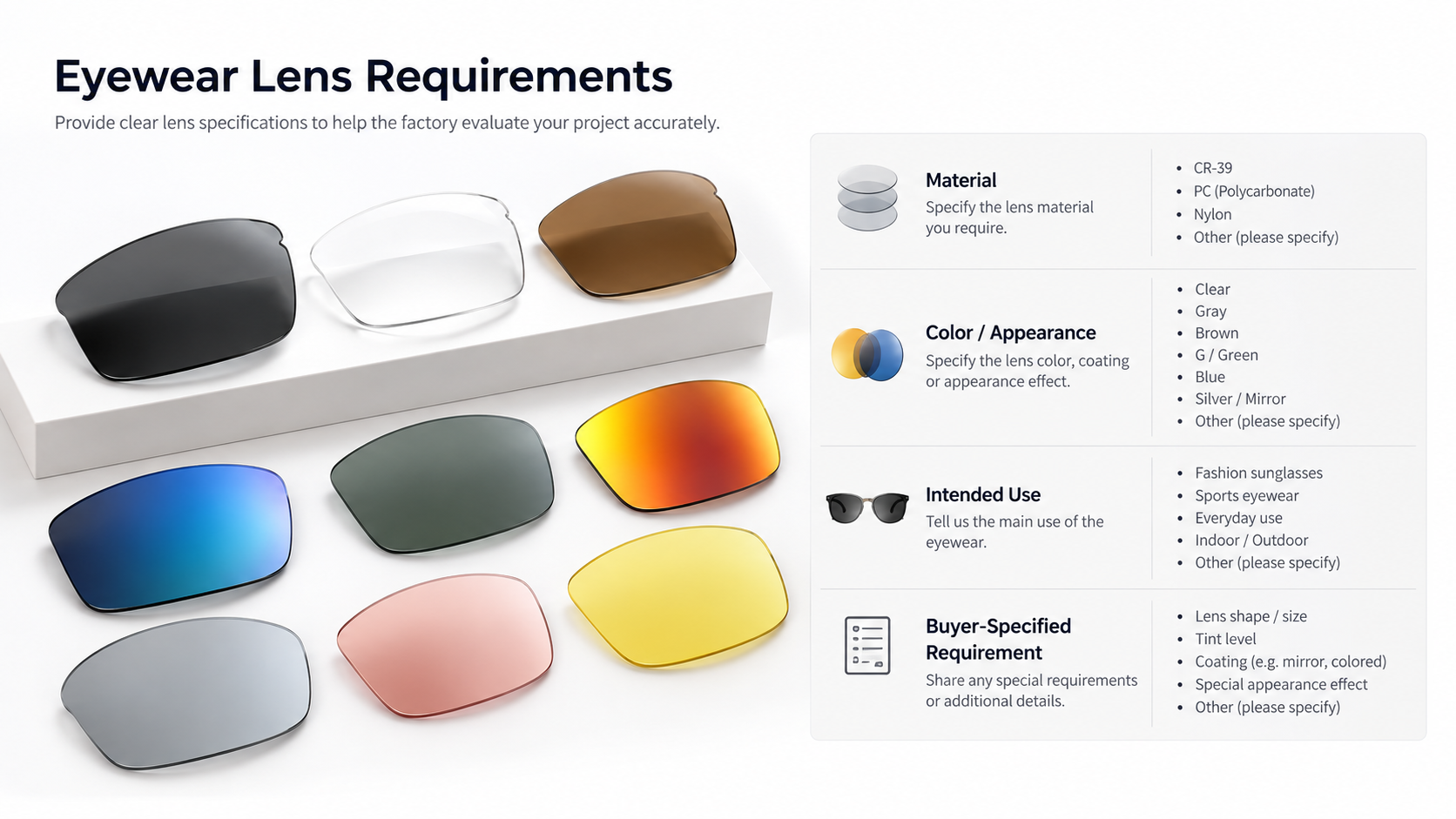
8. Lens Requirements
Information to provide
- Lens material
- Lens color or visual appearance
- Intended product use
- Any specific lens requirement included in your purchasing specification
If a particular functional or performance characteristic is required, communicate it as a requirement that still needs to be confirmed against the actual product specification.
Why the factory needs it
Different lens requirements can affect the product configuration, pricing, and any later testing or market requirements.
What if the lens specification is not finalized?
Explain the intended use and identify which lens requirements are mandatory and which remain open.
Do not assume that an unspecified lens automatically provides UV400 protection, anti-fog performance, impact resistance, or any other unconfirmed function.
Performance claims should only be used after the relevant product specification and supporting evidence have been confirmed.
9. Target Market, Intended Use, and Compliance Requirements
Information to provide
- Target country or market
- Intended product use
- Product category
- Buyer-specific purchasing or quality requirements
- Regulatory or testing requirements already defined by the buyer
Why the factory needs it
Market and technical requirements can depend on the actual product, intended use, and destination market.
A standard, regulation, test method, product marking, registration, test report, certificate, and factory audit are not interchangeable concepts.
For example, ISO 12312-1:2022 addresses sunglasses for general use within its defined scope, while ISO 12311:2023 specifies reference test methods for sunglasses and related eyewear.
In the United States, the FDA guidance on impact-resistant lenses provides separate regulatory information relating to spectacle and sunglass lenses.
These examples show why “compliance” should not be treated as one generic checkbox.
What if you do not know the applicable requirements?
Do not guess.
Provide the target market, intended use, and any buyer-specific requirements you already know. The applicable regulatory, testing, marking, or documentation requirements should then be confirmed for the actual product and destination market.
This article does not assume that a particular HECHANG product automatically meets a specific regulation, certification, test, or market requirement.
10. Quantity, Packaging, and Commercial Requirements
Information to provide
- Estimated order quantity
- Quantity by model or color, where relevant
- Required packaging type
- Buyer-specific purchasing requirements
- Target market
- Target launch or delivery timing, if already defined
Estimated quantity is not the same as factory MOQ
The buyer's estimated quantity describes the expected project volume.
It should not be confused with a factory's minimum order quantity.
This article does not state a general HECHANG MOQ because the applicable quantity requirements may depend on the product and customization involved.
Why the factory needs this information
A project cannot be evaluated only from its appearance.
Materials, manufacturing processes, quantities, packaging, and other purchasing requirements can all influence how the project is priced and planned.
HECHANG has confirmed that buyers should also explain what type of packaging they want to pair with the product.
What if the final quantity or packaging is not confirmed?
Provide the best current estimate and clearly label it as an estimate.
For packaging, explain the type of packaging you currently expect to use rather than presenting an unfinished requirement as final.
What If You Do Not Have All the Specifications Yet?
You do not need to make unfinished decisions look final.
For an initial HECHANG project discussion, available design and branding information can provide a starting point, and a physical sample or 2D drawing can also be used as a project reference.
A complete quotation requires more complete product information, particularly specifications that affect materials, manufacturing processes, dimensions, branding, and packaging.
Requirements that are already fixed.
Requirements that reflect your current preference but may still change.
Items that still require discussion or further product-development input.
This distinction helps both the buyer and the factory understand what is already decided and what still needs to be resolved.
Buyer Preparation Checklist
Before contacting an eyewear factory about a custom project, prepare as much of the following information as is currently available.
Product and Project
- Product type
- Project route: existing product/private label, modified existing design, or full custom development
- Intended product use
- Product or design reference
Design Information
- Available design artwork
- Physical sample, if available
- 2D drawing, if available
- Details to retain
- Details to change
Materials and Components
- Frame material
- Lens material
- Relevant component materials
- Other material requirements
Dimensions
- Confirmed dimensions
- Reference dimensions
- Dimensions still open for discussion
Branding
- Logo artwork
- Logo placement
- Logo size
- Desired visual result
Lens
- Lens material
- Lens color or appearance
- Intended use
- Buyer-defined functional requirements, if any
Packaging
- Required or preferred packaging type
- Packaging branding requirements, if applicable
Market and Purchasing Requirements
- Target market
- Buyer-specific purchasing or quality requirements
- Known regulatory or testing requirements
- Estimated quantity
- Target timing, if already defined
Open Questions
- Specifications not yet finalized
- Items requiring further discussion
If you are still evaluating potential manufacturing partners, read 5 Key Questions to Ask Before Choosing a Sunglasses OEM/ODM Supplier for a separate checklist focused on supplier selection.
Custom Eyewear Requirement Sheet
To make project preparation easier, HECHANG has created a Custom Eyewear Requirement Sheet that buyers can use to organize the information discussed in this guide.
The main sections include:
Project Information
- Company / Brand
- Contact Person
- Product Type
- Project Type
- Intended Use
- Target Market
Product Reference and Design
- Design Artwork Available
- Physical Sample Available
- 2D Drawing Available
- Reference Product / Model
- Requested Changes
- Additional Design Notes
Materials and Components
- Frame Material
- Lens Material
- Relevant Component Materials
- Other Material Requirements
- Items Requiring Discussion
Dimensions
- Lens Width
- Lens Height
- Bridge Width
- Overall Frame Width
- Temple Length
- Other Required Dimensions
- Reference Dimensions
- Dimensions Not Yet Finalized
Branding
- Logo Artwork
- Logo Placement
- Logo Size
- Desired Branding Appearance
- Other Branding Notes
Lens Requirements
- Lens Material
- Lens Color / Appearance
- Intended Use
- Buyer-Specified Functional Requirements
- Requirements Still Open
Packaging
- Preferred Packaging Type
- Packaging Branding Requirements
- Packaging Notes
Commercial and Purchasing Requirements
- Estimated Order Quantity
- Quantity Breakdown, if known
- Buyer-Specific Purchasing / Quality Requirements
- Target Launch or Delivery Timing
- Other Commercial Requirements
Open Items
- Confirmed Requirements
- Preferred Requirements
- Items Requiring Discussion
- Additional Notes
-
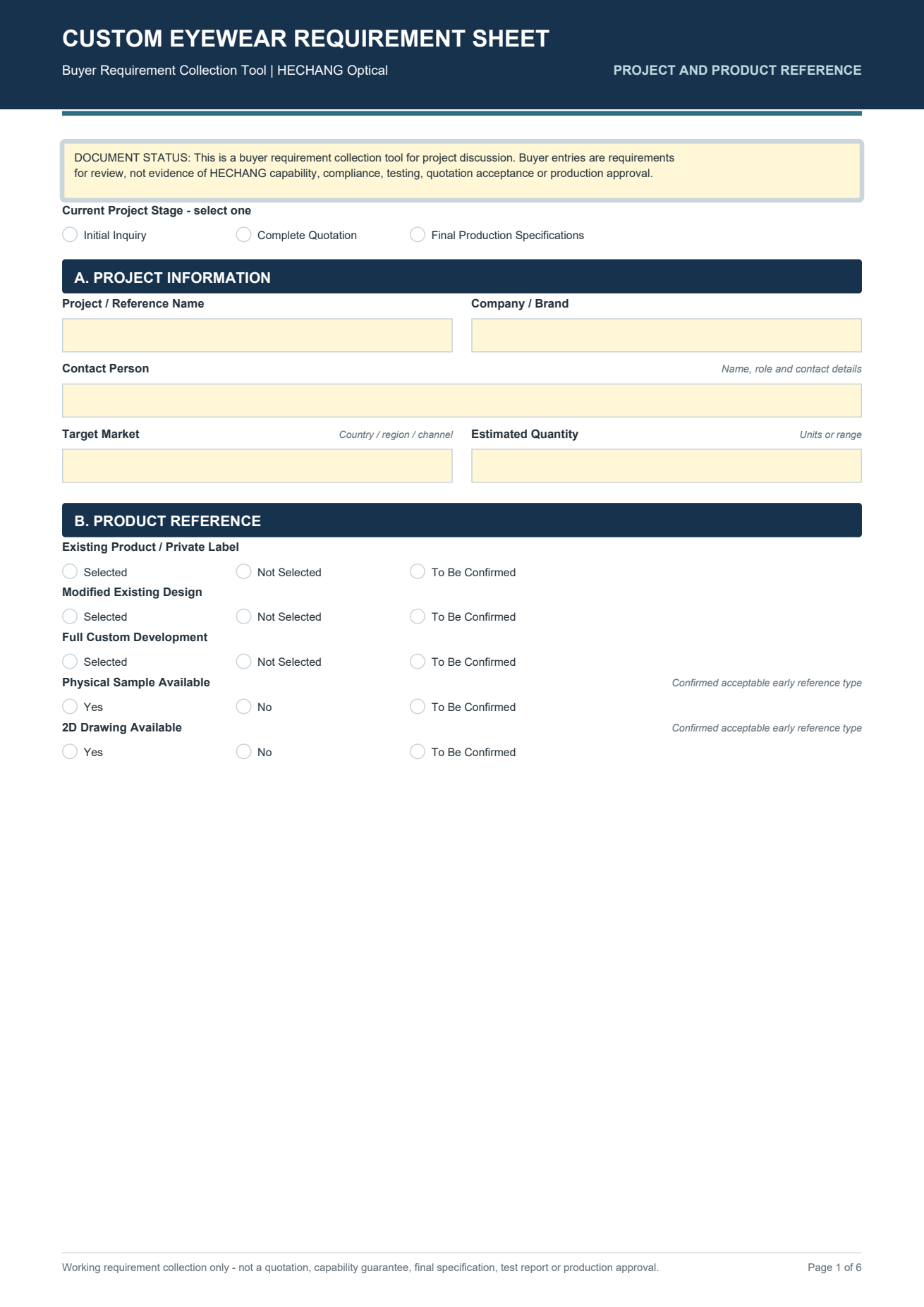
Preview of the HECHANG Custom Eyewear Requirement Sheet
Download the Custom Eyewear Requirement Sheet
Choose the editable Excel version if you want to complete the sheet digitally, or download the PDF version for easy viewing, printing, or sharing.
Download Editable Excel Sheet (ZIP) Download PDF Requirement Sheet
The Excel version is provided as a ZIP file. No email submission is required to download either version.
FAQ
Do I need a complete tech pack before contacting HECHANG Optical?
Not necessarily for the initial discussion. HECHANG can begin a custom eyewear discussion using available design and branding information. A physical sample or 2D drawing can also be used as an initial project reference. More complete specifications will still be required before a complete quotation and final production requirements can be confirmed.
Can I start discussing a custom eyewear project with a physical sample or 2D drawing?
Yes. HECHANG has confirmed that a physical sample or 2D drawing can be used as part of the initial communication for a custom project. Additional product information will still be needed as the project progresses toward a complete quotation and confirmed production specifications.
What information is needed for a complete eyewear quotation?
A complete quotation requires sufficiently complete product information. Important pricing factors include materials and manufacturing processes. Depending on the project, dimensions, branding requirements, packaging, quantities, and other buyer-specific purchasing requirements may also need to be confirmed before final pricing can be prepared.
Does a private-label project require the same information as a full custom eyewear project?
Not necessarily. A private-label project starts from an existing product, while a full custom development project starts from a different product-development stage. As a result, the type and level of information required can differ depending on how much of the product needs to be customized or developed.
What if my materials, dimensions, or other specifications are not finalized yet?
Separate the information into confirmed requirements, preferred requirements, and open items. This helps the factory understand what is already fixed, what reflects your current preference, and what still requires discussion without treating an early-stage idea as a final production specification.

Why Floating Lens Sunglasses Are the Ultimate Choice for Outdoor Fishing and Adventure

Cat-Eye Sunglasses: Who Should Stock Them and Why They Always Sell

The Ultimate Guide to Aviator Sunglasses: Styles, Materials & History

Eyewear Sample Approval Checklist: What Buyers Should Confirm Before Mass Production

Premium Cellulose Propionate Sunglasses – Flexible, Hypoallergenic, and Perfect for All-Day Comfort 220003CA

Trendy Cellulose Propionate Sunglasses – Modern Frames with Superior Durability

Customizable Professional Green Sports Sunglasses S1083

Professional Blue Sports Sunglasses Wholesale S1491
Submit Your Request Now!
Before diving into our services, please take a moment to fill out the corresponding form, detailing the type of eyewear you wish to import from China. Whether it's sunglasses, optical frames, reading glasses, or children’s glasses, we are committed to providing you with tailored solutions that meet your needs. Let us know your preferred materials, whether you require matching glasses case packaging, or any other specific requirements you may have.
Rest assured that your privacy is important to us, and all information provided will be handled with the utmost confidentiality.

MANUFACTURING ROOTS DATING BACK TO 1976.
Specializing in OEM and ODM eyewear manufacturing for international brands, HECHANG Optical serves customers across Europe, the United States, Japan, Australia, India, Russia, and other global markets. More about ↗
We’re here


 Scan QR Code